| Common Name |
Jacob Cline Bee Balm |
| Botanical Name |
Monarda didyma ‘Jacob Cline’ |
| Plant Type |
Herbaceous perennial |
| Hardiness Zone |
4-9 |
| Mature Size |
4-5 ft tall, 3-4 ft wide |
| Sun |
Full sun to light shade |
| Soil |
Moist, well-drained |
| Bloom Time |
July to August |
| Bloom Color |
Deep red |
| Native To |
North America |
| Pollinator Friendly |
Hummingbirds, butterflies, bees |
Why Jacob Cline for Wisconsin
Jacob Cline is one of the best bee balm varieties because it has strong resistance to powdery mildew. That’s the number one complaint about bee balm in our humid Wisconsin summers, and Jacob Cline handles it far better than the species. The deep red flowers are larger than most cultivars and they bloom for weeks in July and August. Hummingbirds treat it like a fueling station.
Planting Instructions
When: Spring (May) after frost danger has passed.
Where: Full sun with good air circulation. Avoid crowding, which promotes mildew.
How: Space 18-24 inches apart. Plant at the same depth. Amend heavy clay with compost for better drainage.
Care Throughout the Season
Spring: New shoots appear mid-spring. Thin crowded clumps to improve airflow.
Summer: Peak bloom in July. Deadhead spent flowers to extend blooming. Water at the base, not overhead.
Fall: Leave seed heads for birds. Cut back after a hard frost or leave until spring.
Winter: Divide every 2-3 years in spring to keep clumps vigorous and prevent overcrowding.
Common Problems in Wisconsin
Powdery mildew: Jacob Cline resists it better than most, but stressed plants in tight spaces can still get it. Good spacing and morning sun help.
Spreading: Bee balm spreads by runners. It will colonize adjacent areas if not contained. Pull unwanted shoots in spring or plant in a contained bed.
Companion Planting
Coneflower and Black-eyed Susan for a native meadow look. Russian Sage adds blue contrast. Ornamental grasses provide late-season structure after bee balm fades.
Design and Landscape Uses
Pollinator gardens, cottage gardens, rain gardens, or naturalized plantings. Plant in drifts of 5-7 for a statement. The height (4-5 feet) works well at the back of a border. Outstanding in a hummingbird garden paired with other tubular flowers.
Fun Fact
Bee balm leaves are edible and have a minty, oregano-like flavor. They were historically used by the Oswego people to make tea, which is why another common name for Monarda is “Oswego tea.” The leaves can be dried and used in cooking.
| Common Name |
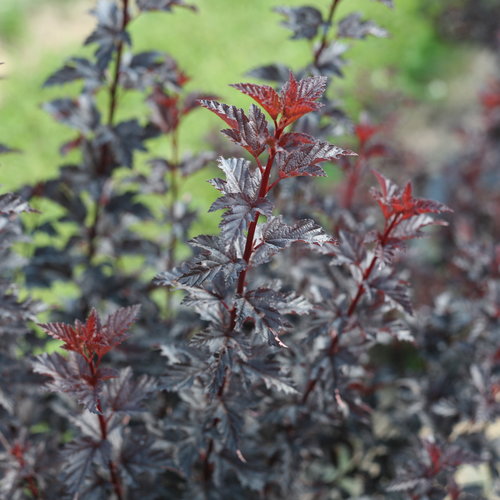
Summer Wine Ninebark |
| Botanical Name |
Physocarpus opulifolius ‘Seward’ |
| Plant Type |
Deciduous shrub |
| Hardiness Zone |
3-7 |
| Mature Size |
5-6 ft tall, 5-6 ft wide |
| Sun |
Full sun to part shade |
| Soil |
Adaptable, tolerates clay |
| Bloom Time |
Late spring |
| Bloom Color |
White to pale pink |
| Native To |
North America |
| Deer Resistant |
Yes |
Why Summer Wine for Wisconsin
Summer Wine is a more compact version of Diablo ninebark, topping out around 5-6 feet instead of 8-10. The dark burgundy foliage holds its color from spring through fall without fading to green the way some purple-leaf shrubs do. It’s native to North America, handles our clay soils without complaint, and deer leave it alone. The white flower clusters in late spring attract pollinators, and the peeling bark adds winter texture.
Planting Instructions
When: Spring or fall. Very forgiving about timing.
Where: Full sun for the best foliage color. Tolerates part shade but leaves will lean more green.
How: Dig wide, not deep. Plant at the same level as the container. These adapt to almost any soil. Water well at planting, mulch, and walk away.
Care Throughout the Season
Spring: New growth emerges deep purple. Blooms appear in late May to early June.
Summer: Foliage stays dark. Very drought tolerant once established.
Fall: Leaves may shift to bronze or reddish tones. Interesting seed capsules persist.
Winter: Exfoliating bark provides texture. Prune in late winter if you want to shape it or control size.
Common Problems in Wisconsin
Powdery mildew: Can occur in humid summers with poor air circulation. Good spacing and full sun prevent most issues.
Overgrowth: Even the compact varieties can get larger than expected. Prune to a framework of 4-5 main stems in late winter to keep it tidy.
Companion Planting
Karl Foerster Grass for vertical contrast. Catmint at the base echoes the purple tones. Hydrangea paniculata varieties create a layered border. Daylilies in warm colors pop against the dark foliage.
Design and Landscape Uses
Mixed shrub borders, foundation plantings, hedges, or as a standalone specimen. The dark foliage creates a backdrop that makes lighter plants in front glow. Plant it behind yellow or chartreuse plants for strong contrast.
Fun Fact
Ninebark gets its common name from the bark, which peels in thin layers to reveal multiple colors underneath. Count them if you want, but there are more than nine.
Pinky Winky Hydrangea (Hydrangea paniculata ‘DVPPinky’)
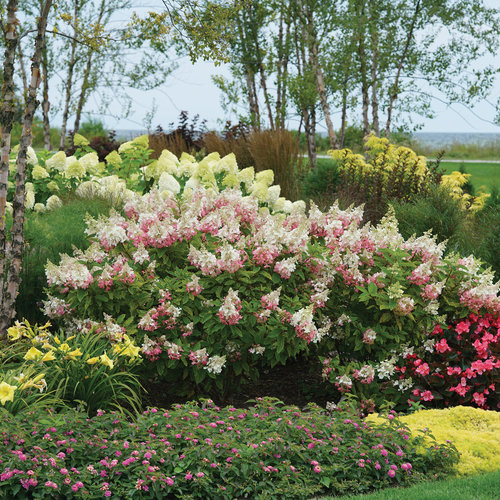
Panicle hydrangeas are the workhorses of the Wisconsin shrub border, and Pinky Winky stands out even in that reliable group. This Proven Winners selection produces enormous cone-shaped flower panicles that open white at the tip and age to deep pink from the bottom up, creating a two-toned effect that no other hydrangea can match. Thick, sturdy stems hold those big blooms upright without flopping, even after a thunderstorm.
Quick Facts
| Botanical Name |
Hydrangea paniculata ‘DVPPinky’ (Pinky Winky®) |
| Plant Type |
Deciduous Flowering Shrub |
| Mature Size |
6-8 ft. tall, 6-8 ft. wide |
| Hardiness Zone |
USDA Zones 3-8 (outstanding in Zone 5b) |
| Sun Exposure |
Full Sun to Part Sun (best color in full sun) |
| Soil |
Average, well-drained; adaptable to most types |
| Bloom Time |
Mid-summer through fall (July to frost in Wisconsin) |
| Flower Color |
White aging to deep pink (two-toned) |
| Flower Size |
12-16 in. panicles |
| Growth Rate |
Moderate to Fast |
Why This Plant for Wisconsin / Zone 5b
Hardy to Zone 3, Pinky Winky does not even blink at a Wisconsin winter. Like all panicle hydrangeas, it blooms on new wood, so even a brutal February will not cost you a single flower. The plant simply grows fresh stems in spring and blooms on schedule every summer.
The two-toned flower display is what sets Pinky Winky apart from other panicle types. As the season progresses, the lower florets on each panicle shift from white to a rich, rosy pink. Meanwhile, the tip keeps pushing new white florets. The result is a bicolor cone that looks different every week from July through October. That extended show carries a Wisconsin garden through the late-summer gap when many perennials have finished flowering.
Planting Instructions
When to Plant: Spring through early fall. Spring is ideal for root establishment.
Site Selection: Full sun gives the best flower color and the sturdiest stems. Light afternoon shade is fine, especially in southern Wisconsin. Avoid deep shade, which produces leggy growth and fewer blooms.
Spacing: Give Pinky Winky room. Plant 6 to 8 feet from other large shrubs or structures. This plant fills its space.
Hole Prep: Dig a hole twice the width of the container and the same depth. The top of the root ball should be level with the surrounding soil.
Watering In: Soak the root zone thoroughly at planting. Water deeply once a week for the first season.
Mulch: Apply 2 to 3 inches of bark mulch or wood chips. Keep mulch 3 to 4 inches away from the base of the stems.
Care Throughout the Season
Spring: Prune back by about one-third in late winter or early spring, just before new growth starts. Cut each stem back to a pair of healthy buds. This maintains a compact shape and promotes stronger, thicker stems that support the heavy flower panicles. A single application of balanced slow-release fertilizer in early spring is sufficient.
Summer: Water deeply during dry spells. Pinky Winky has average water needs, but prolonged drought can cause flowers to brown prematurely instead of developing their signature pink color. Enjoy watching the color transformation begin in late July and August.
Fall: The flower panicles deepen to a dark rose and eventually dry to a warm tan. Leave them on the plant for winter interest. They look striking against snow and provide visual structure in the bare garden.
Winter: No special protection required. The dried panicles can be left standing or removed at your preference. Major pruning waits until late winter.
Common Problems in Wisconsin
Flowers Not Turning Pink: The color change is a natural aging process, not a soil pH response. If flowers stay white longer than expected, drought or very cool summer temperatures may be slowing the transition. Consistent watering helps.
Floppy Stems in Shade: Pinky Winky has some of the sturdiest stems among panicle hydrangeas, but plants grown in too much shade may still lean. Move to a sunnier spot if this is persistent.
Leaf Spot: Occasional in wet summers. Good air circulation and avoiding overhead watering reduce the risk. Remove and discard affected leaves to prevent spread.
Deer: Panicle hydrangeas are not a preferred food, but hungry deer in winter may nibble stems. Fencing or repellent sprays protect young plants during their first couple of winters.
Companion Planting Suggestions
- Karl Foerster Feather Reed Grass (Calamagrostis x acutiflora) – Vertical counterpoint to the rounded shrub form
- Purple Dome Aster (Symphyotrichum novae-angliae) – Fall purple blooms at the feet of the pink-toned panicles
- Annabelle Hydrangea (Hydrangea arborescens) – White mopheads contrast with the pink-and-white cones
- Diablo Ninebark (Physocarpus opulifolius) – Dark burgundy leaves provide dramatic backdrop
- Sedum Autumn Joy (Hylotelephium ‘Herbstfreude’) – Pink fall flowers and succulent texture complement the late-season show
Design & Landscape Uses
Pinky Winky makes a bold statement as a specimen plant in a front yard or as the anchor of a mixed shrub border. Its size (6 to 8 feet in both directions) gives it the visual weight to hold a corner bed or frame a garden entrance.
A row of Pinky Winky along a fence line or property border creates a spectacular summer-to-fall hedge. The dried flower panicles extend the display well into winter. It also pairs well with ornamental grasses and late-blooming perennials for a border that peaks in August and September, when many gardens start to wind down.
Fun Facts
- The two-toned color effect happens because Pinky Winky has indeterminate flowering. New white florets keep emerging at the tip of the panicle while older florets at the base age to pink. The result is a living gradient that changes week by week.
- Soil pH has no effect on Pinky Winky’s flower color, unlike bigleaf hydrangeas. The pink develops from natural cell aging, not aluminum availability. You cannot turn these flowers blue.
- Pinky Winky was bred in Belgium by Johan Van Huylenbroeck and introduced by Proven Winners. The name comes from a character on the British children’s television show Teletubbies.
Find Pinky Winky Hydrangea at Heritage Hill Nursery
Want a shrub that puts on a color show from midsummer through the first frost? Stop by to see Pinky Winky and get our recommendations for the best spot in your yard.
Visit Us in West Bend
Heritage Hill Nursery | 10801 Pleasant Valley, Cedarburg, WI 53012

Amethyst Falls Wisteria (Wisteria frutescens ‘Amethyst Falls’)
Wisteria gets a bad reputation in gardening circles, and for understandable reasons. The Asian species (W. sinensis and W. floribunda) are aggressive invaders that swallow buildings, crush pergolas, and spread into wild areas. Amethyst Falls is the answer to every gardener who wants those cascading purple flower clusters without the destruction. This is a selection of our native American wisteria, well-behaved and perfectly suited to Wisconsin gardens.
Quick Facts
| Botanical Name |
Wisteria frutescens ‘Amethyst Falls’ |
| Plant Type |
Deciduous Flowering Vine (Native) |
| Mature Size |
15-20 ft. long (on support structure) |
| Hardiness Zone |
USDA Zones 5-9 (reliable in Zone 5b) |
| Sun Exposure |
Full Sun to Part Sun (best bloom in full sun) |
| Soil |
Moist, well-drained; mildly acidic to neutral |
| Bloom Time |
Late spring to early summer, with repeat bloom |
| Flower Color |
Lavender-purple |
| Flower Clusters |
4-6 in. racemes, lightly fragrant |
| Growth Rate |
Moderate (about 1/3 the rate of Asian wisteria) |
Why This Plant for Wisconsin / Zone 5b
The number one reason to choose Amethyst Falls over Asian wisteria: it is not invasive. Wisteria frutescens is native to the eastern United States and grows at roughly one-third the rate of its Asian cousins. You get the signature hanging flower clusters and twining habit without the vine taking over your neighbor’s fence, your roof, or the nearest forest preserve.
Zone 5b sits right at the northern edge of this vine’s range, which means site selection matters. A south-facing wall or fence gives Amethyst Falls the warmth it needs to bloom well and survive our coldest winters. The payoff is worth the thought: cascading lavender-purple flowers in late spring, often with a lighter repeat bloom in midsummer. And unlike Asian species that can take a decade to flower, Amethyst Falls typically blooms in its first or second year after planting.
Planting Instructions
When to Plant: Spring, after the last frost date has passed. This gives the vine a full growing season to root in before winter.
Site Selection: Full sun against a south- or west-facing wall, fence, or sturdy arbor. The reflected warmth from a building wall helps in Zone 5b. Make sure your support structure is solid; wisteria vines add weight as they mature.
Hole Prep: Dig a hole twice the width of the root ball. Plant at the same depth as the container. If planting near a wall, position the root ball 12 to 18 inches out from the foundation.
Support: Install a trellis, arbor, or wire system at planting time. Amethyst Falls is a twining vine that needs something to wrap around.
Watering In: Water deeply and regularly through the first growing season. Once established (after year two), it becomes moderately drought tolerant.
Mulch: Apply 2 to 3 inches of organic mulch around the base, keeping it away from the stem.
Care Throughout the Season
Spring: As new growth emerges, train young shoots onto your support structure. Amethyst Falls blooms on new wood, so any winter dieback will not prevent flowering. Apply a phosphorus-rich fertilizer (like bone meal) in early spring to encourage blooms. Avoid high-nitrogen fertilizers, which push leaf growth at the expense of flowers.
Summer: After the main bloom, watch for a lighter second flush of flowers. Prune back long, whippy shoots to maintain shape and encourage branching. Water during extended dry periods.
Fall: Reduce watering as the vine goes dormant. Clean up any fallen leaves. This is a good time to assess your support structure and make repairs before winter adds snow load.
Winter: In Zone 5b, some tip dieback is normal and expected. Do not prune until spring, when you can see exactly which wood is alive. A 3 to 4 inch layer of mulch over the root zone provides extra insulation.
Common Problems in Wisconsin
Winter Dieback: Zone 5b is at the edge of this vine’s cold tolerance. South-facing placement and winter mulching reduce the risk. Even with dieback, the vine typically regenerates from established roots.
No Blooms: Usually caused by too much shade, too much nitrogen fertilizer, or a vine that is still establishing. Give it full sun and phosphorus-heavy feeding. Patience helps: most plants bloom by year two.
Japanese Beetles: Can chew on leaves in July. Hand-picking or neem oil spray manages small infestations without harming pollinators.
Confusion with Asian Species: Make sure you are purchasing the correct species. Wisteria frutescens (American) has shorter flower clusters (4-6 inches) and blooms after leaves emerge. Asian species have longer racemes and bloom before leafing out. Buy from a reputable nursery to be certain.
Companion Planting Suggestions
- Clematis (Clematis spp., Zone 4-hardy varieties) – A second vine on the same arbor extends the bloom season
- Catmint (Nepeta x faassenii) – Purple-blue groundcover beneath the vine echoes the flower color
- Coral Bells (Heuchera spp.) – Colorful foliage at the base adds season-long interest
- Salvia (Salvia nemorosa ‘May Night’) – Upright purple spikes bloom at the same time
- Daylilies (Hemerocallis spp.) – Tough, reliable summer color to follow the wisteria bloom
Design & Landscape Uses
Amethyst Falls is perfect for covering an arbor, pergola, or garden gate with a romantic cascade of purple flowers. Its moderate growth rate means you can train it without fighting it, and it will not crush a standard residential arbor the way Asian wisteria would.
It also works well on a sturdy fence, a porch railing, or a trellis attached to a garage wall. In smaller gardens, you can even grow it as a freestanding standard (tree form) by staking a single stem and pruning the top into a rounded canopy. This technique creates a stunning focal point for a patio or courtyard.
Fun Facts
- Wisteria frutescens is native from Virginia to Florida and west to Texas. It was first described by Carl Linnaeus in 1753, making it one of the earlier North American plants cataloged by European botanists.
- American wisteria flowers are fragrant and attract hummingbirds, butterflies, and native bees. The vine is also a larval host for the silver-spotted skipper butterfly.
- You can tell American wisteria from Asian species by twining direction. W. frutescens twines counterclockwise, while Chinese wisteria (W. sinensis) twines clockwise.
Find Amethyst Falls Wisteria at Heritage Hill Nursery
Want the romance of wisteria without the invasive headache? Visit us to see Amethyst Falls in person and get planting advice tailored to your Zone 5b garden.
Visit Us in West Bend
Heritage Hill Nursery | 10801 Pleasant Valley, Cedarburg, WI 53012
Incrediball Hydrangea (Hydrangea arborescens ‘Abetwo’)
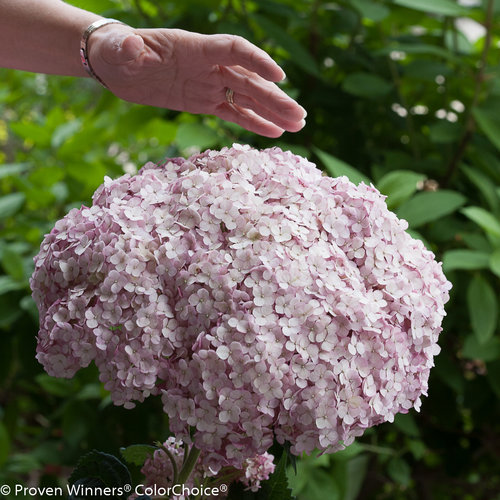
Some hydrangeas demand fussy soil amendments, precise pH levels, and sheltered microclimates. Incrediball is not one of them. This improved selection of our native smooth hydrangea was bred by Proven Winners to fix the one real complaint gardeners had about the classic Annabelle: floppy stems. Incrediball delivers the same massive white snowball blooms on stems strong enough to hold them upright, even after a summer downpour.
Quick Facts
| Botanical Name |
Hydrangea arborescens ‘Abetwo’ (Incrediball®) |
| Plant Type |
Deciduous Flowering Shrub |
| Mature Size |
4-5 ft. tall, 4-5 ft. wide |
| Hardiness Zone |
USDA Zones 3-8 (rock-solid in Zone 5b) |
| Sun Exposure |
Full Sun to Part Shade (6+ hours ideal) |
| Soil |
Average, well-drained; tolerates clay |
| Bloom Time |
Early to mid-summer (June through August in Wisconsin) |
| Flower Color |
Creamy white, aging to jade green |
| Flower Size |
Up to 12 in. diameter |
| Native Range |
Eastern North America |
Why This Plant for Wisconsin / Zone 5b
Incrediball blooms on new wood. That single fact makes it bulletproof in Wisconsin. Our harsh winters can kill stems back to the ground, and that is perfectly fine with this shrub. It regenerates from the roots each spring and blooms reliably every single summer, no matter what January threw at it.
Hydrangea arborescens is native to the eastern United States, meaning its genetics are adapted to the temperature swings, clay soils, and variable rainfall of our region. You will not find yourself babying this plant through a polar vortex. It also supports native pollinators, including bumblebees and smaller solitary bees that work the flower clusters throughout July and August.
Planting Instructions
When to Plant: Spring through early fall. Spring planting gives the roots a full season to establish before winter.
Site Selection: Full sun produces the most blooms and strongest stems. In southern Wisconsin, afternoon shade is acceptable and can help prevent wilt on the hottest days.
Hole Prep: Dig a hole twice the width of the container and the same depth. Do not plant too deep.
Soil Amendments: Work in compost if your soil is heavy clay. Incrediball is not picky, but good drainage helps.
Watering In: Water deeply at planting. Maintain consistent moisture (about 1 inch per week) through the first growing season.
Mulch: Apply 2 to 3 inches of shredded bark or leaf mulch. Keep mulch a few inches from the stems.
Care Throughout the Season
Spring: Cut the entire plant back by about one-third its total height just as new green buds begin to swell. This encourages strong new growth and builds up a woody framework over the years. Apply a balanced slow-release fertilizer once in early spring if desired.
Summer: Water deeply once a week, twice during hot dry stretches. Deadheading spent blooms can encourage a lighter second flush, though it is not required. Watch the flowers transition from creamy white to a soft jade green as the season progresses.
Fall: Leave the dried flower heads on the plant. They add winter texture to the garden and help protect the crown from extreme cold.
Winter: No special protection needed. The stems may die back partially or fully, which is normal. Resist the urge to prune until spring.
Common Problems in Wisconsin
Stem Flop After Heavy Rain: Less common with Incrediball than Annabelle, but possible in very shady sites. Moving to a sunnier location or supporting with a peony ring solves the problem.
Leaf Scorch in Full Sun: During extreme heat waves (95°F+), leaf edges may brown. Deep watering and afternoon shade reduce this. It is cosmetic and does not harm the plant long-term.
Deer Browse: Deer will occasionally nibble new growth in spring. Fencing or deer repellent sprays (applied early and reapplied after rain) are effective.
Powdery Mildew: Can appear in late summer if air circulation is poor. Space plants properly and avoid overhead watering in the evening.
Companion Planting Suggestions
- Hosta (Hosta spp.) – Shade-tolerant foliage contrast at the base
- Russian Sage (Perovskia atriplicifolia) – Airy purple spikes complement the white globes
- Astilbe (Astilbe spp.) – Feathery pink or red plumes for texture contrast
- Diablo Ninebark (Physocarpus opulifolius) – Dark burgundy foliage makes the white blooms pop
- Little Bluestem (Schizachyrium scoparium) – Native grass that turns copper in fall beside the green dried heads
Design & Landscape Uses
Incrediball is a natural fit for foundation plantings, mixed borders, and mass plantings along a fence line. A row of three to five shrubs creates a stunning summer hedge of white that requires minimal maintenance.
It also works well in a rain garden or low spot where water collects, as it handles brief wet periods without complaint. Pair it with dark-leaved shrubs like Diabolo ninebark or Summer Wine ninebark for dramatic contrast. The dried flower heads provide structure in the winter garden, especially when dusted with snow.
Fun Facts
- Incrediball blooms can reach nearly the size of a basketball, roughly 12 inches across. They contain about four times the number of individual florets as Annabelle.
- Hydrangea arborescens was one of the first American shrubs cultivated in European gardens, traveling across the Atlantic in the mid-1700s.
- Unlike bigleaf hydrangeas (H. macrophylla), the flower color of Incrediball is not affected by soil pH. The blooms will always be white to green, regardless of how acidic or alkaline your soil is.
Find Incrediball Hydrangea at Heritage Hill Nursery
Looking for a low-maintenance bloomer that thrives in Wisconsin without any fuss? Come see our selection of Incrediball hydrangeas and get expert advice on where to plant yours.
Visit Us in West Bend
Heritage Hill Nursery | 10801 Pleasant Valley, Cedarburg, WI 53012