| Common Name |
Golden Spirit Smokebush |
| Botanical Name |
Cotinus coggygria ‘Ancot’ |
| Plant Type |
Deciduous shrub |
| Hardiness Zone |
5-8 |
| Mature Size |
8-10 ft tall, 8-10 ft wide |
| Sun |
Full sun to part shade |
| Soil |
Well-drained, average to poor |
| Bloom Time |
Summer (smoky plumes) |
| Foliage Color |
Chartreuse-gold, turns coral/orange in fall |
| Deer Resistant |
Yes |
Why Golden Spirit for Wisconsin
Most smokebush varieties have purple foliage. Golden Spirit flips that with bright chartreuse-gold leaves that practically glow in the landscape. In fall, the foliage shifts through coral, orange, and red tones. The feathery “smoke” plumes appear in summer, giving the shrub its common name. Hardy to Zone 5, it handles our winters and comes back strong.
Planting Instructions
When: Spring after frost danger passes.
Where: Full sun for the brightest gold. Part shade works but color will be more lime-green. Avoid wet sites.
How: Don’t amend the soil much. Smokebush actually performs better in lean, well-drained soil. Rich soil produces lanky growth.
Care Throughout the Season
Spring: New gold foliage emerges. Prune to shape if needed. You can cut back hard to a low framework each spring for more compact growth and larger leaves (but you’ll sacrifice the smoke plumes).
Summer: Feathery plumes develop on unpruned plants. Low water needs once established.
Fall: The color show. Gold turns to coral, orange, and red.
Winter: Bare branch structure. Can die back to the roots in severe winters but typically resprouts vigorously.
Common Problems in Wisconsin
Winter dieback: In harsh Zone 5b winters, stems may die back partially. Prune dead wood in spring. The plant typically recovers from the roots. A sheltered location helps.
Verticillium wilt: Smokebush is susceptible. Avoid planting where tomatoes, peppers, or other Verticillium-susceptible plants have grown recently.
Companion Planting
Summer Wine Ninebark (dark purple against the gold is striking). Blue Star Juniper for year-round blue-green contrast. Catmint at the base. Ornamental grasses for movement.
Design and Landscape Uses
Specimen plant, mixed shrub border, or grouped for a colorful screen. The gold foliage makes it a focal point wherever you put it. Plant against a dark background (evergreens, dark fence) for maximum impact. Can be coppiced (cut to 12 inches annually) for a compact, multi-stemmed form with extra-large leaves.
Fun Fact
The “smoke” in smokebush comes from the fine, hair-like filaments on the spent flower clusters. These create a fuzzy, smoke-like appearance that’s most visible in mid to late summer. Golden Spirit was selected in the Netherlands by Piet Cuypers and introduced under the cultivar name ‘Ancot.’
| Common Name |
Denim ‘n Lace Russian Sage |
| Botanical Name |
Perovskia atriplicifolia ‘Denim ‘n Lace’ |
| Plant Type |
Herbaceous perennial |
| Hardiness Zone |
4-9 |
| Mature Size |
28-32 in tall, 34-36 in wide |
| Sun |
Full sun |
| Soil |
Well-drained, lean to average |
| Bloom Time |
Mid to late summer |
| Bloom Color |
Lavender-blue |
| Deer Resistant |
Yes |
| Drought Tolerant |
Yes |
Why Denim ‘n Lace for Wisconsin
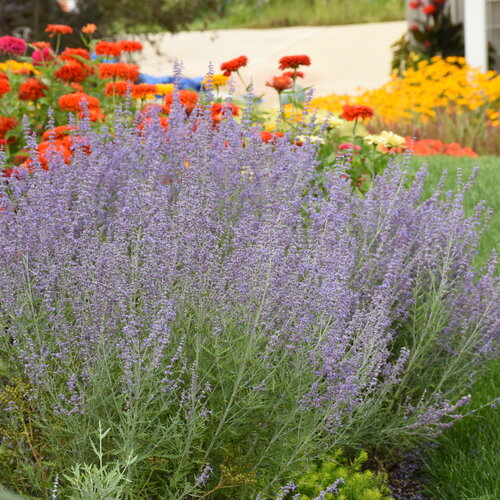
Standard Russian sage gets tall and floppy. Denim ‘n Lace was bred to fix that. It tops out around 30 inches, holds itself upright without staking, and produces heavier flower coverage than the species. The silvery foliage and lavender-blue spikes create a haze of cool color from July through September. Deer and rabbits leave it alone. Once established, it handles drought without blinking.
Planting Instructions
When: Spring, after last frost.
Where: Full sun, hot spots. The hotter and drier the better.
How: Space 30-36 inches apart. Do not amend the soil or fertilize. Lean soil produces sturdier stems. Good drainage is essential.
Care Throughout the Season
Spring: Cut back to 6-8 inches in late spring once you see new buds on the stems. Do not cut back too early in spring; it’s one of the last perennials to show new growth.
Summer: Blooms mid-summer. No deadheading needed.
Fall: Leave the stems standing. The dried seed heads have winter interest.
Winter: Leave stems intact. They protect the crown from frost and look good with snow.
Common Problems in Wisconsin
Root rot: The number one killer. Avoid wet, heavy soil. Never overwater. If your soil is clay, plant in a raised bed or amend heavily with gravel.
Late emergence: Don’t panic in spring when it seems dead. Russian sage is always the last thing to wake up. Wait until late May to see growth.
Companion Planting
Coneflower for warm-tone contrast. Black-eyed Susan creates a prairie meadow effect. Sedum picks up the fall color baton. Ornamental grasses like Karl Foerster for vertical accents.
Design and Landscape Uses
Hot, sunny borders. Gravel gardens. Mass plantings along driveways. Mixed with ornamental grasses for a naturalistic look. The silver foliage softens any planting combination. Works beautifully against dark-foliaged shrubs like ninebark.
Fun Fact
Despite the name, Russian sage is not actually related to culinary sage (Salvia) and it’s not from Russia. The genus Perovskia is native to Afghanistan and Pakistan. The common name stuck because the foliage looks and smells somewhat sage-like. Denim ‘n Lace was a Proven Winners introduction.
| Common Name |
Vanilla Strawberry Hydrangea |
| Botanical Name |
Hydrangea paniculata ‘Renhy’ |
| Plant Type |
Deciduous shrub |
| Hardiness Zone |
4-8 |
| Mature Size |
6-7 ft tall, 4-5 ft wide |
| Sun |
Full sun to part shade |
| Soil |
Moist, well-drained |
| Bloom Time |
Mid-summer to fall |
| Bloom Color |
White aging to pink to strawberry red |
| Deer Resistant |
Moderate |
Why Vanilla Strawberry for Wisconsin
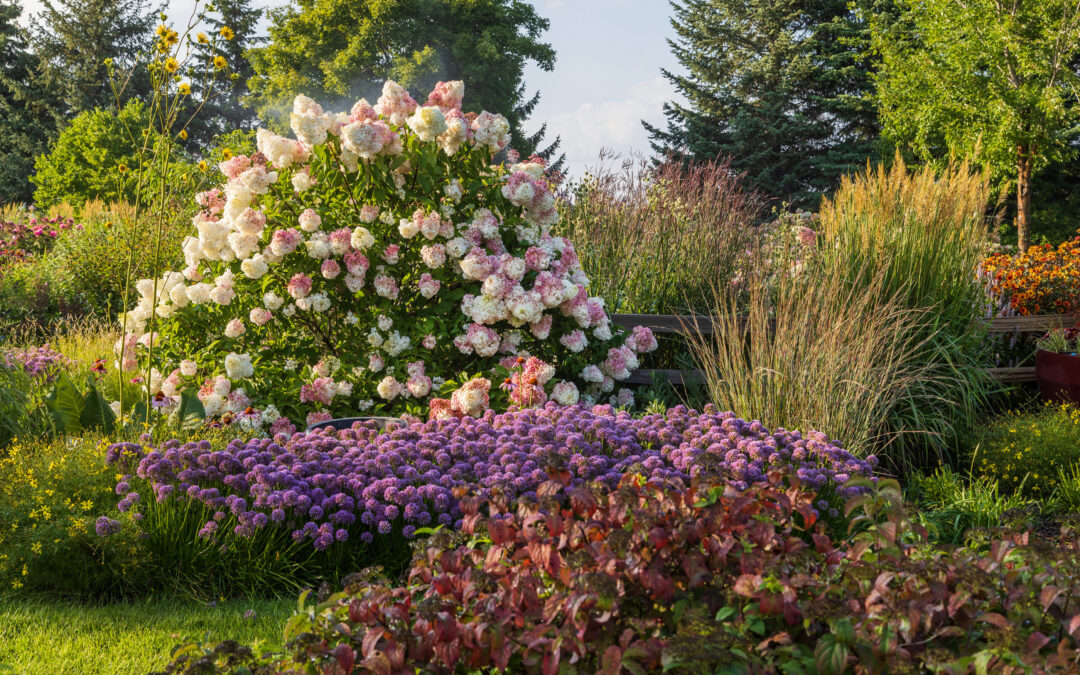
Vanilla Strawberry was one of the first panicle hydrangeas to show strong color change through the season. The flower heads open creamy white in July, then transition through shades of pink to a deep strawberry red by September. Each panicle shows multiple colors at once because the flowers at the bottom age faster than those at the top. Hardy to Zone 4, it blooms on new wood, so Wisconsin winters never cost you a year of flowers.
Planting Instructions
When: Spring or early fall.
Where: Full sun for the most intense color development. Part shade is fine but pinking may be less dramatic.
How: Dig a hole twice as wide as the root ball. Amend heavy clay with compost. Water deeply and mulch.
Care Throughout the Season
Spring: Cut back to 12-18 inches in late winter or early spring. This promotes strong new growth and larger flower heads. Blooms form on new wood.
Summer: Flowers start appearing in July. Keep soil consistently moist for the best blooms. A layer of mulch helps.
Fall: The color show peaks in September. Leave the dried flower heads on for winter interest or cut for dried arrangements.
Winter: Hardy and dormant. The dried panicles look striking with snow on them.
Common Problems in Wisconsin
Floppy stems: Heavy flower heads can cause stems to lean, especially after rain. Hard spring pruning to a low framework helps. Staking individual stems is another option.
Leaf scorch: In full sun during heat waves, leaf edges can brown. Consistent moisture and mulch prevent this.
Companion Planting
Catmint at the base provides blue contrast. Sedum carries the fall color theme. Ornamental grasses add movement alongside the heavy flower heads. Boxwood provides evergreen structure in winter when the hydrangea is bare.
Design and Landscape Uses
Specimen plant, mixed shrub border, foundation planting, or cut flower garden. The multi-color blooms make a single plant look like an arrangement. Plant where you walk past it daily to watch the color transformation. Makes an outstanding cut flower, both fresh and dried.
Fun Fact
The color change in Vanilla Strawberry is triggered by the pigment anthocyanin, which develops as the flowers age. Cooler night temperatures in fall accelerate the color shift. This is the same pigment responsible for fall leaf color in maples. The name Vanilla Strawberry refers to the two-tone appearance: vanilla (white) at the top and strawberry (pink-red) at the bottom of each panicle.
| Common Name |
Burning Bush |
| Botanical Name |
Euonymus alatus |
| Plant Type |
Deciduous shrub |
| Hardiness Zone |
4-8 |
| Mature Size |
15-20 ft tall (dwarf varieties 6-10 ft) |
| Sun |
Full sun to part shade |
| Soil |
Adaptable, tolerates most soil types |
| Fall Color |
Brilliant scarlet red |
| Deer Resistant |
Moderate |
| Native To |
Northeast Asia |
Why Burning Bush for Wisconsin
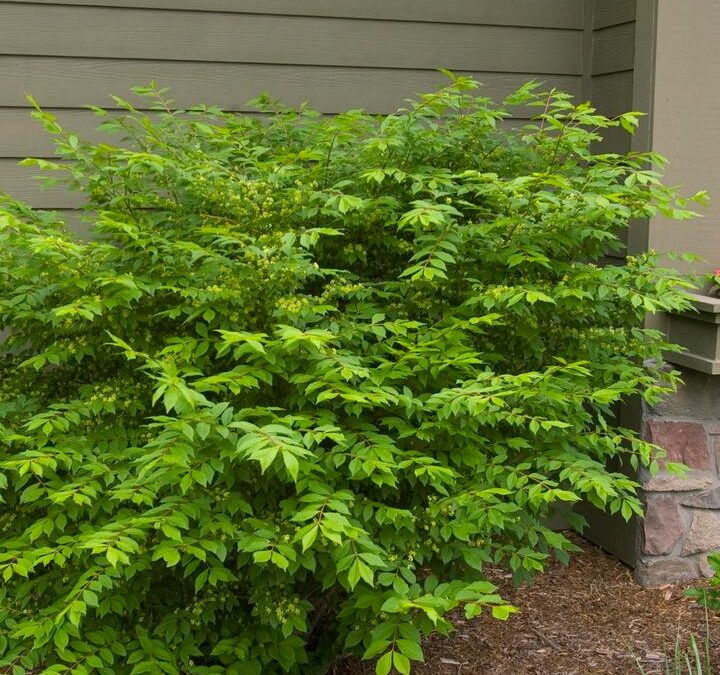
Burning bush is one of the most reliable sources of fall color in Southeast Wisconsin. When the leaves turn in October, the entire shrub becomes a uniform, intense scarlet that nothing else quite matches. It adapts to almost any soil condition, handles urban pollution, tolerates pruning, and requires very little maintenance. There is a reason customers ask for it year after year.
A note on invasiveness: burning bush is classified as invasive in several northeastern states. It is not currently banned in Wisconsin, but it does self-seed in some areas. If this concerns you, plant the compact variety ‘Compactus’ or consider native alternatives like chokeberry or Virginia sweetspire for similar fall color.
Planting Instructions
When: Spring or fall.
Where: Full sun produces the most intense fall color. Part shade works but the red will be less vivid.
How: Extremely adaptable. Dig a hole, plant it, water it. Tolerates clay, sand, acid, and alkaline soils.
Care Throughout the Season
Spring: Green foliage emerges. Prune to shape if needed.
Summer: Low maintenance. Tolerates drought once established.
Fall: The show. Brilliant scarlet foliage for 2-3 weeks.
Winter: The corky, winged bark provides subtle texture. Interesting branch structure when bare.
Common Problems in Wisconsin
Scale insects: Euonymus scale can be a problem. Watch for white or brown bumps on stems. Horticultural oil in late winter or early spring helps control them.
Overgrowth: The species can reach 15-20 feet if left unpruned. Most people want the dwarf ‘Compactus’ form (6-10 feet). Prune annually to maintain size.
Self-seeding: Birds spread the seeds. Remove seedlings if they appear where you don’t want them.
Companion Planting
Ornamental grasses (blonde tones contrast with the red). Evergreens like boxwood or arborvitae provide a green backdrop that makes the fall color even more striking. Aster and mums for a full fall display.
Design and Landscape Uses
Hedges, screens, foundation plantings, or specimen use. The dwarf form fits most residential situations. Works well at property borders or wherever you want a guaranteed fall color statement. Plant it where you can see it from a window.
Fun Fact
The “wings” on burning bush stems are made of corky tissue and are the reason for the species name “alatus” (meaning winged). These wings make the bare winter branches easy to identify. The common name comes from the biblical burning bush, though the actual plant in that story was likely a different species entirely.
Burning Bush is available at our Cedarburg nursery in both standard and dwarf forms.
Visit Us in Cedarburg

| Common Name |
Caramel Coral Bell |
| Botanical Name |
Heuchera ‘Caramel’ |
| Plant Type |
Evergreen perennial |
| Hardiness Zone |
4-9 |
| Mature Size |
12-18 in tall, 18-24 in wide |
| Sun |
Part shade to full shade |
| Soil |
Moist, well-drained, humus-rich |
| Bloom Time |
Late spring to early summer |
| Bloom Color |
Cream |
| Deer Resistant |
Yes |
Why Caramel for Wisconsin
Heuchera ‘Caramel’ is one of the hardiest coral bells available. Where many Heuchera cultivars struggle through Zone 5b winters, Caramel comes through reliably. The foliage shifts through shades of amber, gold, and honey depending on the season and light. It brightens shaded areas that would otherwise be dominated by green. The leaves are semi-evergreen, providing interest even in mild winter stretches.
Planting Instructions
When: Spring (May) once soil has warmed.
Where: Part shade to full shade. Morning sun with afternoon shade is ideal. Too much direct sun can bleach the foliage.
How: Plant with the crown at or slightly above soil level. Heucheras planted too deep are prone to crown rot. Good drainage is essential.
Care Throughout the Season
Spring: Clean up any winter-damaged foliage. New leaves emerge with warm tones. Push any heaved crowns back into the soil and add mulch.
Summer: Cream-colored flower spikes appear. Some gardeners remove these to keep focus on the foliage. Water during dry spells.
Fall: Foliage deepens in color. Leave it standing for winter interest.
Winter: Semi-evergreen in milder winters. Mulch around (not on top of) the crown for insulation.
Common Problems in Wisconsin
Heaving: Freeze-thaw cycles push the crown out of the soil. Check in early spring and push crowns back down. Mulching helps stabilize soil temperature.
Crown rot: Caused by planting too deep or in waterlogged soil. Good drainage and proper planting depth prevent this.
Companion Planting
Hosta (blue-leaved varieties for contrast). Brunnera for blue flowers. Astilbe for feathery texture and color. Ferns for a woodland garden feel.
Design and Landscape Uses
Front of shaded borders, woodland gardens, containers, and edging paths. The warm foliage color stands out among greens and blues. Mass plant 3-5 for a carpet effect. Works beautifully in combination containers with trailing plants.
Fun Fact
Coral bells get their common name from the tiny bell-shaped flowers that dangle from wiry stems above the foliage. The genus Heuchera is named for Johann Heinrich von Heucher, an 18th-century German botanist.