
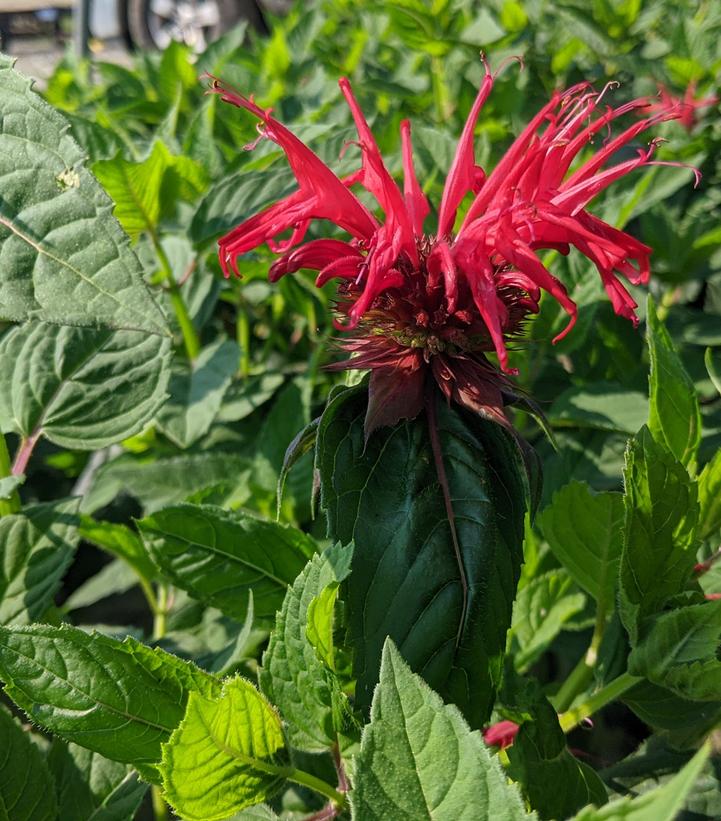
| Common Name | Jacob Cline Bee Balm |
| Botanical Name | Monarda didyma ‘Jacob Cline’ |
| Plant Type | Herbaceous perennial |
| Hardiness Zone | 4-9 |
| Mature Size | 4-5 ft tall, 3-4 ft wide |
| Sun | Full sun to light shade |
| Soil | Moist, well-drained |
| Bloom Time | July to August |
| Bloom Color | Deep red |
| Native To | North America |
| Pollinator Friendly | Hummingbirds, butterflies, bees |
Why Jacob Cline for Wisconsin
Jacob Cline is one of the best bee balm varieties because it has strong resistance to powdery mildew. That’s the number one complaint about bee balm in our humid Wisconsin summers, and Jacob Cline handles it far better than the species. The deep red flowers are larger than most cultivars and they bloom for weeks in July and August. Hummingbirds treat it like a fueling station.
Planting Instructions
When: Spring (May) after frost danger has passed.
Where: Full sun with good air circulation. Avoid crowding, which promotes mildew.
How: Space 18-24 inches apart. Plant at the same depth. Amend heavy clay with compost for better drainage.
Care Throughout the Season
Spring: New shoots appear mid-spring. Thin crowded clumps to improve airflow.
Summer: Peak bloom in July. Deadhead spent flowers to extend blooming. Water at the base, not overhead.
Fall: Leave seed heads for birds. Cut back after a hard frost or leave until spring.
Winter: Divide every 2-3 years in spring to keep clumps vigorous and prevent overcrowding.
Common Problems in Wisconsin
Powdery mildew: Jacob Cline resists it better than most, but stressed plants in tight spaces can still get it. Good spacing and morning sun help.
Spreading: Bee balm spreads by runners. It will colonize adjacent areas if not contained. Pull unwanted shoots in spring or plant in a contained bed.
Companion Planting
Coneflower and Black-eyed Susan for a native meadow look. Russian Sage adds blue contrast. Ornamental grasses provide late-season structure after bee balm fades.
Design and Landscape Uses
Pollinator gardens, cottage gardens, rain gardens, or naturalized plantings. Plant in drifts of 5-7 for a statement. The height (4-5 feet) works well at the back of a border. Outstanding in a hummingbird garden paired with other tubular flowers.
Fun Fact
Bee balm leaves are edible and have a minty, oregano-like flavor. They were historically used by the Oswego people to make tea, which is why another common name for Monarda is “Oswego tea.” The leaves can be dried and used in cooking.
Jacob Cline Bee Balm is available at our Cedarburg nursery.