Donald Wyman Crabapple (Malus ‘Donald Wyman’)
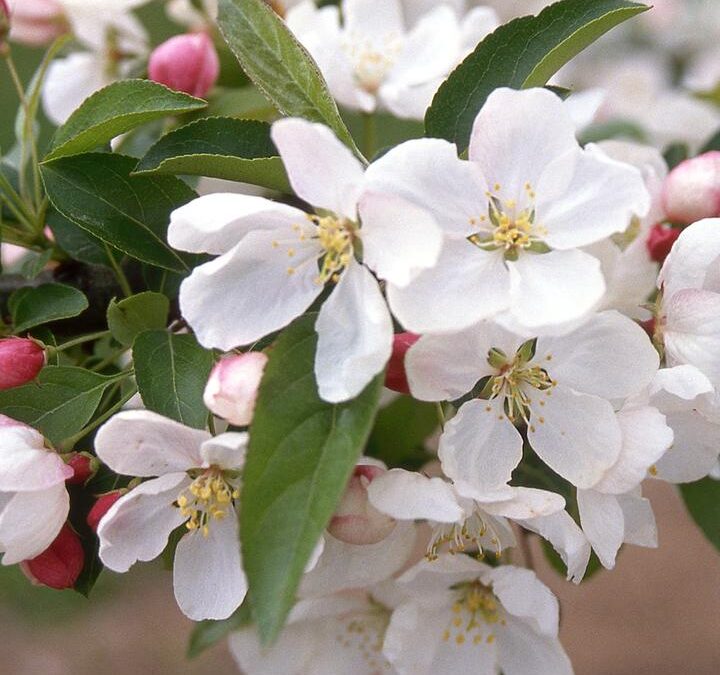
If you want a four-season ornamental tree that practically takes care of itself, the Donald Wyman crabapple belongs on your shortlist. This variety has earned a reputation among Midwest landscapers and homeowners for good reason: gorgeous spring flowers, clean summer foliage, bright red fruit that feeds birds through winter, and a graceful rounded canopy year-round.
Quick Facts
| Botanical Name |
Malus ‘Donald Wyman’ |
| Plant Type |
Deciduous Flowering Tree |
| Mature Size |
20-25 ft. tall, 20-25 ft. wide |
| Hardiness Zone |
USDA Zones 4-8 (excellent for Zone 5b) |
| Sun Exposure |
Full Sun (6+ hours) |
| Soil |
Adaptable; tolerates clay, loam, and sandy soils with adequate drainage |
| Bloom Time |
Mid-spring (late April to early May in Wisconsin) |
| Flower Color |
White (opening from pink buds) |
| Fruit |
Glossy red, 3/8 in., persistent through winter |
| Growth Rate |
Moderate |
Why This Plant for Wisconsin / Zone 5b
Wisconsin gardeners have learned the hard way that not all crabapples are created equal. Older varieties drop messy fruit, lose their leaves to scab by July, and look haggard by Labor Day. Donald Wyman is a different story. Developed at the Arnold Arboretum in Massachusetts, this cultivar shows outstanding resistance to apple scab, cedar-apple rust, fire blight, and powdery mildew. That disease resistance matters enormously in our humid Midwest summers.
The small, persistent red fruits will not make a mess on your sidewalk the way larger-fruited crabapples do. Instead, they hang on the branches well into January and February, providing critical food for cedar waxwings, robins, and other overwintering birds. For a Zone 5b yard, that kind of winter wildlife value is hard to beat.
Planting Instructions
When to Plant: Spring (after frost) or early fall, at least 6 weeks before the ground freezes.
Site Selection: Choose a spot with full sun and good air circulation. Avoid low-lying areas where cold air pools in spring.
Hole Prep: Dig a hole 2 to 3 times wider than the root ball and just as deep. The root flare should sit at or slightly above soil level.
Backfill: Use the native soil. Amending with compost is fine for heavy clay, but avoid burying the root flare.
Watering In: Soak thoroughly after planting. Water twice a week for the first month, then weekly through the first growing season.
Mulch: Apply 2 to 3 inches of wood chip mulch in a ring around the tree, keeping it 4 to 6 inches away from the trunk.
Care Throughout the Season
Spring: Enjoy the spectacular white bloom display. After petal drop, apply a slow-release balanced fertilizer (10-10-10) around the drip line if growth seems sluggish. Most established Donald Wymans do fine without supplemental feeding.
Summer: Water deeply during dry spells, especially in the first two years. One inch of water per week is the target. Keep an eye on foliage for any signs of disease, though this variety rarely has issues.
Fall: Watch the fruit ripen to brilliant red. No special care needed. This is a great time to plant a new Donald Wyman if you have been considering one.
Winter: Prune in late winter while the tree is still dormant. Remove any dead, damaged, or crossing branches. Light shaping is fine, but heavy pruning is rarely necessary. The persistent red fruit will brighten your winter landscape.
Common Problems in Wisconsin
Apple Scab: Donald Wyman has strong scab resistance, but in exceptionally wet springs, minor leaf spotting can appear. Good air circulation and avoiding overhead watering help prevent this.
Japanese Beetles: These pests occasionally feed on crabapple foliage in late June and July. Hand-picking or targeted neem oil sprays work well for small populations.
Rabbit and Deer Browse: Young trees may need trunk guards or fencing through the first few winters. Once the bark matures, damage is less common.
Late Spring Frost: A hard frost during bloom can reduce fruit set for the year. Planting on a slight slope or away from frost pockets minimizes the risk.
Companion Planting Suggestions
- Karl Foerster Feather Reed Grass (Calamagrostis x acutiflora) – Vertical texture beneath the rounded canopy
- Walker’s Low Catmint (Nepeta x faassenii) – Purple-blue flowers echo the spring color palette
- Autumn Blaze Serviceberry (Amelanchier x grandiflora) – Another four-season tree for layered interest
- Black-eyed Susan (Rudbeckia fulgida) – Summer and fall color at the tree’s feet
- Creeping Phlox (Phlox subulata) – Spring groundcover that blooms alongside the crabapple
Design & Landscape Uses
Donald Wyman works beautifully as a standalone specimen tree in a front yard, where its rounded form and seasonal changes create year-round curb appeal. It also performs well when planted in groups of three along a property border or driveway.
Because of its moderate size (topping out around 20 to 25 feet), it fits comfortably under power lines and near patios without overwhelming the space. The persistent fruit and spring bloom make it a natural centerpiece for a wildlife-friendly garden design.
Fun Facts
- Donald Wyman was a longtime horticulturist at Harvard’s Arnold Arboretum. The tree named after him was selected for its exceptional disease resistance and ornamental qualities.
- The small red fruits are technically edible, though they are tart and best left for the birds. Cedar waxwings can strip a tree clean in a single afternoon.
- Donald Wyman crabapple is one of the most recommended varieties by university extension programs across the Upper Midwest, consistently ranking in the top tier of ornamental crabapple evaluations.
Find Donald Wyman Crabapple at Heritage Hill Nursery
Ready to add a four-season showstopper to your Wisconsin yard? Stop by and talk with our team about the best placement, sizing, and planting tips for your specific property.
Visit Us in West Bend
Heritage Hill Nursery | 10801 Pleasant Valley, Cedarburg, WI 53012
| Common Name |
Rozanne Geranium |
| Botanical Name |
Geranium ‘Gerwat’ (Rozanne) |
| Family |
Geraniaceae |
| Plant Type |
Herbaceous perennial |
| Hardiness Zone |
5-8 |
| Mature Size |
18-20 in tall, 24-28 in wide |
| Sun Exposure |
Full sun to part shade |
| Soil |
Average, well-drained |
| Bloom Time |
June to frost |
| Bloom Color |
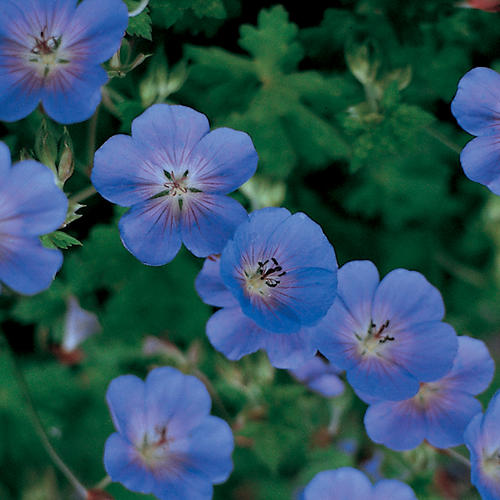
Violet-blue with white center |
| Deer Resistant |
Yes |
| Pollinator Friendly |
Yes (bees) |
Why Rozanne Geranium for Wisconsin
Rozanne blooms from June until hard frost. That is not an exaggeration. Most perennials give you two to three weeks of flowers. Rozanne gives you five months. The violet-blue flowers with white centers appear nonstop without deadheading. It fills in gaps, spills over edges, and covers ground that would otherwise be weeds. Hardy to Zone 5, it comes back reliably year after year.
Planting Instructions
When: Spring through early fall. Very forgiving about planting time.
Where: Full sun to part shade. More sun means more flowers, but it handles afternoon shade fine.
How: Space plants 24-28 inches apart. They spread to fill in. Plant at the same depth as the container. Water well at planting.
Care Throughout the Season
Spring: New foliage emerges in mid-spring. No action needed.
Summer: Blooms start in June and keep going. No deadheading required. Water during drought.
Fall: Still blooming. The foliage often turns red or orange before frost, adding another layer of interest.
Winter: Cut back dead foliage after a hard freeze. Mulch lightly for the first winter.
Common Problems in Wisconsin
Slugs: Occasionally a problem in very wet, shady conditions. Good drainage prevents most issues.
Flopping: In too much shade, stems can get leggy. More sun keeps it compact. You can shear it back mid-season if needed and it will rebloom.
Companion Planting
Daylilies provide height above Rozanne’s mounding habit. Catmint creates a blue-and-purple drift. Coneflower adds contrast with warm tones. Hosta pairs well in part-shade situations. Ornamental grasses provide texture contrast.
Design and Landscape Uses
Rozanne is a gap-filler. Plant it at the front of borders, along walkways, in rock gardens, or as a groundcover under roses. It weaves between other plants and fills bare spots that would otherwise need mulching or weeding. One of the most versatile perennials you can own.
Fun Fact
Rozanne was named the Perennial Plant Association’s Plant of the Year in 2008. It was discovered by chance in a Somerset, England garden where two different geranium species had crossed naturally. The gardeners, Donald and Rozanne Waterer, recognized something special and sent it to a nursery for propagation. It’s been one of the best-selling perennials worldwide ever since.
Rozanne Geranium is available at our Cedarburg nursery.
One plant covers a lot of ground.
Visit Us in Cedarburg
| Common Name |
Black Lace Elderberry |
| Botanical Name |
Sambucus nigra ‘Eva’ |
| Family |
Adoxaceae |
| Plant Type |
Deciduous shrub |
| Hardiness Zone |
4-7 (thrives in Zone 5b) |
| Mature Size |
6-8 ft tall, 6-8 ft wide |
| Sun Exposure |
Full sun to part shade |
| Soil |
Moist, well-drained |
| Bloom Time |
Early summer |
| Bloom Color |
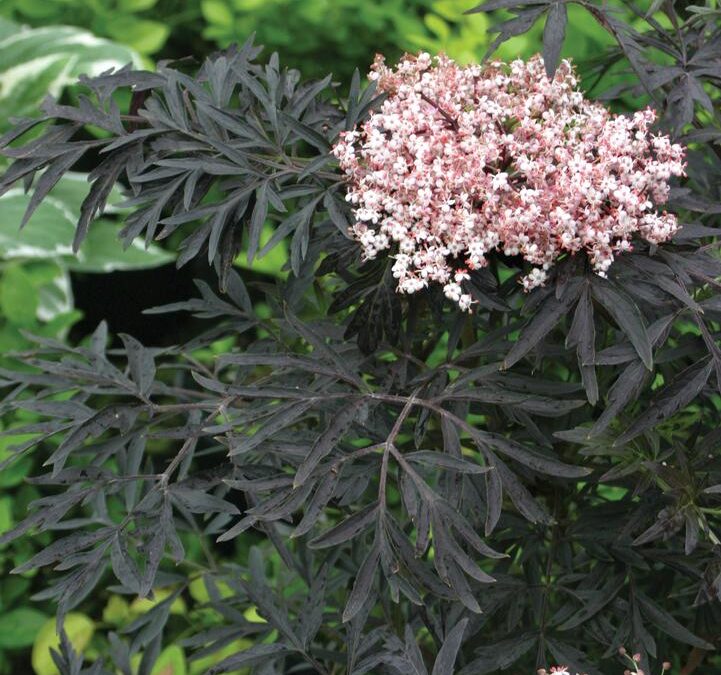
Pink |
| Native To |
Europe (cultivar) |
| Deer Resistant |
Yes |
| Pollinator Friendly |
Yes (bees, butterflies) |
Why Black Lace Elderberry for Wisconsin
Black Lace stands out in any landscape. The deeply dissected foliage looks like a Japanese maple from a distance, but this shrub is far tougher. It handles Wisconsin winters without hesitation and comes back strong every spring. The dark purple, almost black foliage holds its color all season. In early summer, large flat-topped clusters of pink flowers appear, followed by dark berries that attract birds.
Planting Instructions
When: Spring (late April to May) or early fall (September).
Where: Full sun produces the darkest foliage color. Part shade is fine but leaves will be more green than purple.
How: Dig a hole twice as wide as the root ball. Plant at the same depth. Water thoroughly and mulch 2-3 inches around the base.
Care Throughout the Season
Spring: New growth emerges with striking dark color. Prune to shape if needed. Black Lace blooms on new wood, so spring pruning is safe.
Summer: Enjoy the pink flower clusters in June. Water during extended dry spells.
Fall: Birds will clean up the dark berries. Foliage stays attractive until frost.
Winter: Cut back hard in late winter if you want to keep it compact. It responds well to aggressive pruning.
Common Problems in Wisconsin
Aphids: Elderberries can attract aphids on new growth. A strong spray of water usually knocks them off.
Suckering: This shrub spreads by root suckers. Remove unwanted shoots to keep it contained. In the right spot, this is actually a feature, not a problem.
Companion Planting
Karl Foerster Feather Reed Grass adds vertical contrast. Rozanne Geranium fills the base with blue flowers. Catmint provides a lighter color echo. Hydrangea paniculata varieties create a layered shrub border.
Design and Landscape Uses
Use Black Lace as a specimen plant where you want a bold color statement. It works as a focal point in mixed borders, a privacy screen (plant 4-5 feet apart), or a dramatic backdrop for lighter-colored perennials. The dark foliage makes everything planted in front of it pop.
Fun Fact
Black Lace was discovered as a chance seedling in Europe and introduced to the market by Proven Winners. The name comes from the lace-like quality of the deeply cut leaves. Despite its refined appearance, this is one tough plant.
Black Lace Elderberry is available at our Cedarburg nursery.
Stop by to see the foliage color in person.
Visit Us in Cedarburg

| Common Name |
Tamarack / Eastern Larch |
| Botanical Name |
Larix laricina |
| Family |
Pinaceae |
| Plant Type |
Deciduous conifer |
| Hardiness Zone |
2-5 (thrives in Zone 5b) |
| Mature Size |
40-60 ft tall, 15-30 ft wide |
| Sun Exposure |
Full sun (6+ hours) |
| Soil Preference |
Moist, acidic, well-drained; tolerates boggy conditions |
| Fall Color |
Brilliant golden yellow |
| Native To |
North America |
| Deer Resistant |
Yes |
| Wildlife Value |
Seeds feed birds; nesting habitat |
Why Tamarack for Wisconsin
Tamarack is native to northern Wisconsin and perfectly adapted to our climate. It thrives in wet, low-lying areas where many other trees would struggle or die. The standout feature is the fall color: brilliant golden yellow needles that glow in October sunlight before dropping. It’s one of the most striking fall displays you can get from a conifer.
Because it’s a deciduous conifer (it drops its needles each fall), people sometimes think it’s dying the first year. It’s not. That’s just what it does.
Planting Instructions
When: Spring (April to May) while dormant or just breaking dormancy.
Where: Full sun. Naturally grows in bogs and wet meadows, so moist or poorly drained areas are fine. Avoid exposed, windy sites because of its shallow root system.
How: Plant at the same depth as the root ball. In wet sites, no amendments needed. In average garden soil, keep it consistently moist for the first few years. Mulch generously.
Care Throughout the Season
Spring: Fresh needles emerge in small, soft clumps along the branches. Light green and delicate. No action needed.
Summer: Water during dry periods, especially younger trees. Tamarack is adapted to moist conditions and won’t tolerate extended drought well.
Fall: The needles turn golden yellow, then drop. This is normal for this species. Enjoy the show.
Winter: The bare branches have a fine, architectural quality. No maintenance needed.
Common Problems in Wisconsin
Larch sawfly: The most significant pest. Larvae feed on needles in late spring and early summer. Heavy infestations can defoliate a tree, though healthy trees usually recover. Monitor and treat if populations are large.
Drought stress: This is a wetland tree at heart. Extended dry periods in average garden soil can cause stress. Deep watering during drought is important.
Wind throw: The shallow root system means tamarack can blow over in strong winds, especially in saturated soil. Don’t plant in exposed, windy locations.
Companion Planting
Red Twig Dogwood provides winter stem color after the tamarack drops its needles. Winterberry Holly adds red berries in fall/winter. Joe-Pye Weed fills the moist ground nearby with late-summer flowers. Blue Flag Iris works in wet areas at the base. Sedges (Carex) make natural groundcover companions in moist sites.
Design and Landscape Uses
Tamarack is the tree for that wet spot in your yard where nothing else will grow. It also works in rain gardens, along pond edges, and in naturalized landscapes. The golden fall color makes it a standout focal point. Plant several for a grove effect. At 40-60 feet, give it room. This is not a small-space tree.
Fun Fact
Tamarack is one of a small group of deciduous conifers, trees with needles that drop every fall. Others in this group include Dawn Redwood, Bald Cypress, and Ginkgo. First-time tamarack owners often panic in October, thinking the tree is dying. It’s perfectly healthy. The needles come back every spring.
Tamarack is available at our nursery.
The tree for wet sites and stunning fall color. Come see it in person.
Visit Us in Cedarburg
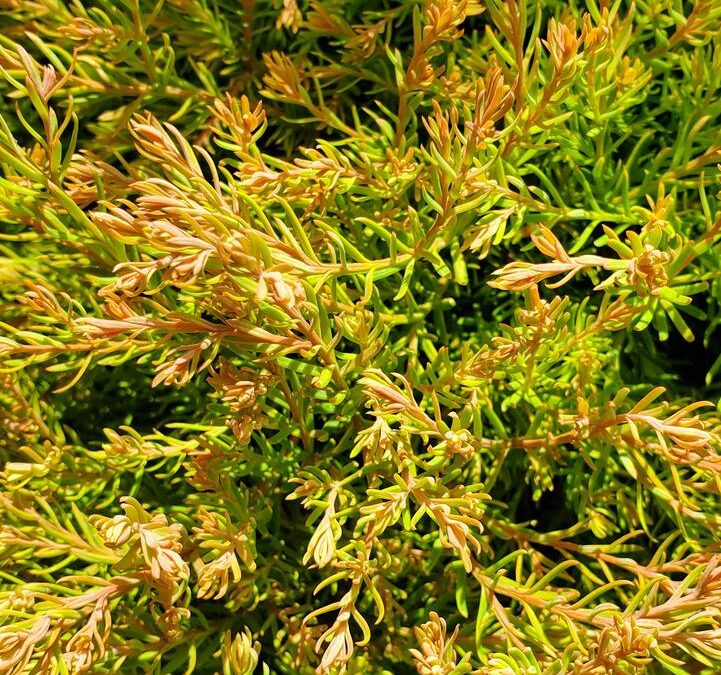
| Common Name |
Fire Chief Globe Arborvitae |
| Botanical Name |
Thuja occidentalis ‘Congabe’ |
| Plant Type |
Evergreen shrub |
| Hardiness Zone |
4-8 (thrives in Zone 5b) |
| Mature Size |
4 ft tall, 4 ft wide |
| Sun Exposure |
Full sun (6+ hours) |
| Soil Preference |
Evenly moist, well-drained |
| Foliage Color |
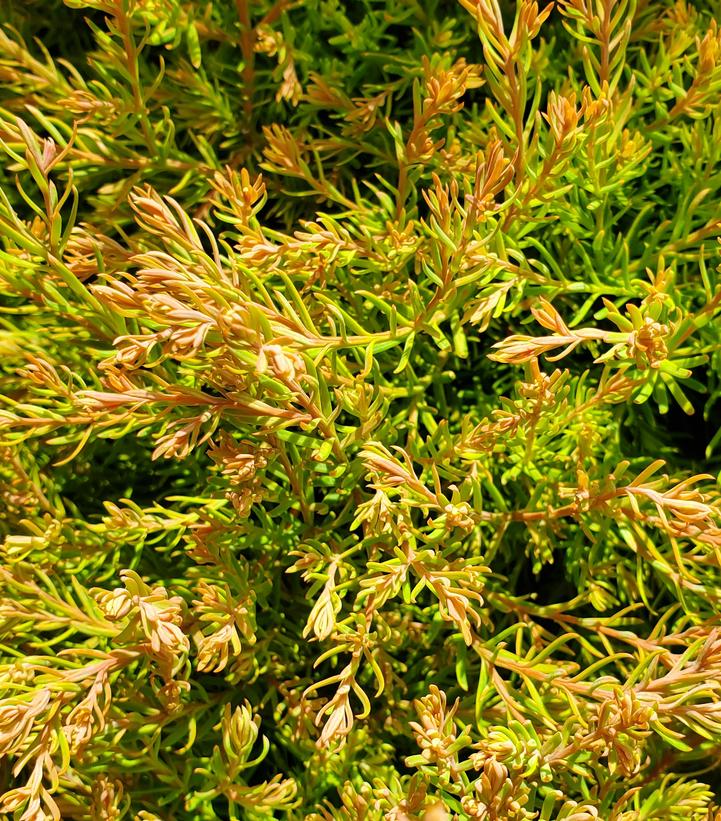
Golden-green (spring/summer) to orange-red (fall/winter) |
| Native To |
North America (cultivar) |
| Deer Resistant |
Moderate |
| Pollinator Friendly |
Minimal |
Why Fire Chief for Wisconsin
Most evergreens give you one color year-round. Fire Chief changes with the seasons, starting golden-green in spring and shifting to orange and red tones as temperatures cool. That kind of color from an evergreen is unusual and adds interest to beds that would otherwise go static in fall and winter. At 4 feet max, it stays small enough for foundation plantings and containers without outgrowing its space.
Planting Instructions
When: Spring (late April to May) or early fall (September). Avoid planting in the heat of summer.
Where: Full sun for the best color. Part shade is tolerated but the foliage won’t develop the intense fall tones.
How: Plant at the same depth as the container. No deeper. Water thoroughly at planting and keep consistently moist for the first growing season.
Care Throughout the Season
Spring: New growth emerges golden-green. No pruning needed to maintain the globe shape.
Summer: Water deeply during dry spells, especially during establishment in the first two years. Consistent moisture keeps foliage healthy. A light layer of mulch around the base helps retain moisture.
Fall: Foliage shifts toward orange and red. This is normal, not a sign of stress.
Winter: The colored foliage persists, providing interest in an otherwise dormant landscape. In areas with heavy snow load, gently brush off accumulation to prevent branch breakage.
Common Problems in Wisconsin
Winter burn: Harsh winter winds can dry out foliage, especially on exposed sites. Planting in a location with some wind protection helps. Anti-desiccant sprays applied in late fall can provide extra protection.
Deer browsing: Arborvitae are a favorite winter food for deer. If deer pressure is high in your area, consider a barrier or repellent spray in winter.
Spider mites: Occasionally a problem in hot, dry summers. A strong spray of water on the foliage usually takes care of minor infestations.
Companion Planting
Blue Star Juniper provides contrasting blue-green foliage. Heuchera adds colorful foliage interest at the base. Dwarf Fountain Grass creates textural contrast. Sedum works as a low groundcover in front. Catmint adds blue-purple flowers in summer.
Design and Landscape Uses
Fire Chief fits almost anywhere. Use it in foundation plantings, border edges, rock gardens, or containers. Its naturally rounded form means no pruning to maintain shape. Plant a row for a low, colorful hedge. Mix with other evergreens for a contrast in form and color. The compact size makes it ideal for small urban lots.
Fun Fact
Fire Chief grows very slowly and can take 20 years to reach its full 4-foot size. That’s actually an advantage: you won’t be fighting to keep it in bounds. Plant it and let it do its thing.
Fire Chief Globe Arborvitae is available at our nursery.
A compact evergreen with year-round color that stays put.
Visit Us in Cedarburg