
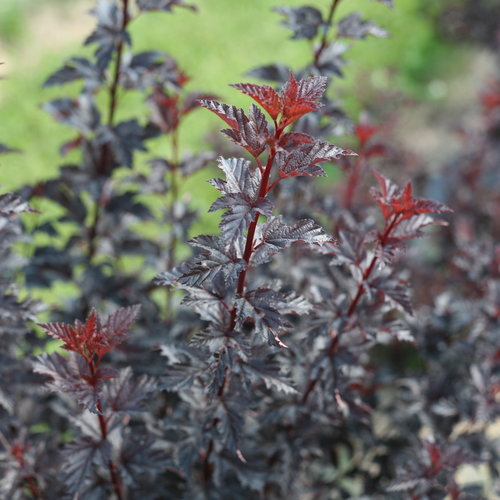
| Common Name | Summer Wine Ninebark |
| Botanical Name | Physocarpus opulifolius ‘Seward’ |
| Plant Type | Deciduous shrub |
| Hardiness Zone | 3-7 |
| Mature Size | 5-6 ft tall, 5-6 ft wide |
| Sun | Full sun to part shade |
| Soil | Adaptable, tolerates clay |
| Bloom Time | Late spring |
| Bloom Color | White to pale pink |
| Native To | North America |
| Deer Resistant | Yes |
Why Summer Wine for Wisconsin
Summer Wine is a more compact version of Diablo ninebark, topping out around 5-6 feet instead of 8-10. The dark burgundy foliage holds its color from spring through fall without fading to green the way some purple-leaf shrubs do. It’s native to North America, handles our clay soils without complaint, and deer leave it alone. The white flower clusters in late spring attract pollinators, and the peeling bark adds winter texture.
Planting Instructions
When: Spring or fall. Very forgiving about timing.
Where: Full sun for the best foliage color. Tolerates part shade but leaves will lean more green.
How: Dig wide, not deep. Plant at the same level as the container. These adapt to almost any soil. Water well at planting, mulch, and walk away.
Care Throughout the Season
Spring: New growth emerges deep purple. Blooms appear in late May to early June.
Summer: Foliage stays dark. Very drought tolerant once established.
Fall: Leaves may shift to bronze or reddish tones. Interesting seed capsules persist.
Winter: Exfoliating bark provides texture. Prune in late winter if you want to shape it or control size.
Common Problems in Wisconsin
Powdery mildew: Can occur in humid summers with poor air circulation. Good spacing and full sun prevent most issues.
Overgrowth: Even the compact varieties can get larger than expected. Prune to a framework of 4-5 main stems in late winter to keep it tidy.
Companion Planting
Karl Foerster Grass for vertical contrast. Catmint at the base echoes the purple tones. Hydrangea paniculata varieties create a layered border. Daylilies in warm colors pop against the dark foliage.
Design and Landscape Uses
Mixed shrub borders, foundation plantings, hedges, or as a standalone specimen. The dark foliage creates a backdrop that makes lighter plants in front glow. Plant it behind yellow or chartreuse plants for strong contrast.
Fun Fact
Ninebark gets its common name from the bark, which peels in thin layers to reveal multiple colors underneath. Count them if you want, but there are more than nine.
Summer Wine Ninebark is available at our Cedarburg nursery.