
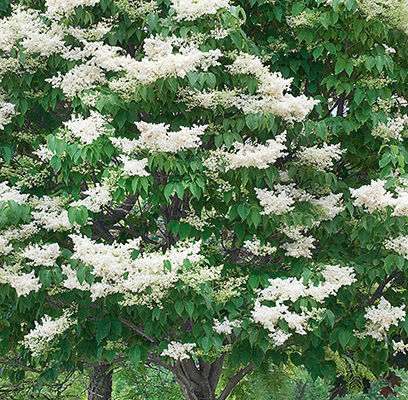
| Common Name | Ivory Silk Japanese Tree Lilac |
| Botanical Name | Syringa reticulata ‘Ivory Silk’ |
| Plant Type | Deciduous tree |
| Hardiness Zone | 3-7 (thrives in Zone 5b) |
| Mature Size | 20-25 ft tall, 15-20 ft wide |
| Sun Exposure | Full sun (6+ hours) |
| Soil Preference | Moist, well-drained; tolerates dry, alkaline, road salt |
| Bloom Time | Early summer |
| Bloom Color | Creamy white |
| Native To | Japan (cultivar) |
| Deer Resistant | Yes |
| Pollinator Friendly | Yes (bees, butterflies) |
Why Ivory Silk for Wisconsin
Most lilacs bloom in spring. Ivory Silk waits until early summer, producing large creamy-white flower panicles right when the spring bloomers have faded. That timing alone makes it valuable. Add in strong branch structure, pest and disease resistance, tolerance for urban conditions including road salt, and you have a tree that performs well in places where a lot of other ornamentals struggle.
Planting Instructions
When: Spring (late April to May) or early fall (September).
Where: Full sun. Tolerates a wide range of soil types. Handles road salt, compacted soil, and urban pollution.
How: Dig a hole 2-3 times the width of the root ball. Plant at the same depth it was growing. Water deeply at planting and mulch to 3 inches, keeping mulch off the trunk.
Care Throughout the Season
Spring: New leaves emerge. No action needed unless you see crossing branches to remove.
Summer: Blooms appear in June. Enjoy them. Prune shortly after blooming if you need to shape the tree. Supplement watering during drought, especially in the first few years.
Fall: Foliage turns yellow-green before dropping. No pruning now.
Winter: The strong branch structure provides good winter interest. Cherry-like bark adds texture.
Common Problems in Wisconsin
Bacterial blight: Can affect lilacs in wet springs. Prune out affected branches. Good air circulation helps.
Borers: Stressed trees can attract borers. Keep the tree healthy with adequate water during dry spells. Avoid wounding the bark with mowers or trimmers.
Companion Planting
Daylilies bloom at the same time and fill the base. Karl Foerster Feather Reed Grass adds movement and texture. Hydrangea paniculata provides follow-up summer blooms. Hosta works in the shadier spots under the canopy as it matures.
Design and Landscape Uses
Ivory Silk is perfect for small spaces. At 20-25 feet, it fits under power lines, along boulevards, and in residential front yards where larger shade trees would overwhelm the space. Works as a specimen, street tree, or focal point. The summer bloom timing fills a gap when few other trees are flowering.
Fun Fact
Like all lilacs, Ivory Silk is a member of the olive family (Oleaceae). It’s one of the most trouble-free ornamental trees you can plant in Wisconsin.
Ivory Silk is available at our nursery.
A great choice for front yards, boulevards, and anywhere you need a compact flowering tree.