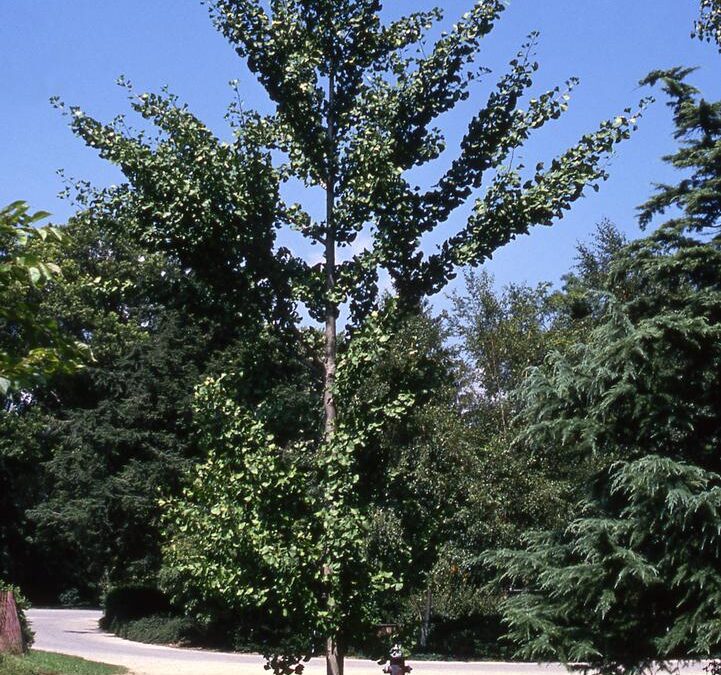
| Common Name |
Autumn Gold Ginkgo |
| Botanical Name |
Ginkgo biloba ‘Autumn Gold’ |
| Plant Type |
Deciduous tree |
| Hardiness Zone |
3-8 |
| Mature Size |
40-50 ft tall, 25-35 ft wide |
| Sun |
Full sun |
| Soil |
Adaptable, well-drained |
| Fall Color |
Brilliant golden yellow |
| Growth Rate |
Slow to moderate |
| Deer Resistant |
Yes |
| Pest Resistant |
Virtually pest-free |
Why Autumn Gold Ginkgo for Wisconsin
The fall color on a ginkgo is unlike anything else. The entire tree turns uniform, pure golden yellow overnight, holds for a week, then drops all its leaves in a single day. It’s dramatic, it’s reliable, and it happens every year. Autumn Gold is a male cultivar, which means no smelly fruit (female ginkgos produce foul-smelling seeds). The tree is virtually pest-free and disease-free. Nothing eats it, nothing infects it. It tolerates urban pollution, salt, and poor soil.
Planting Instructions
When: Spring or fall.
Where: Full sun. Tolerates a wide range of conditions. Good street tree, good yard tree.
How: Standard tree planting. Ginkgos are forgiving. Don’t overwater. They establish slowly but once rooted, they’re permanent.
Care Throughout the Season
Spring: Unique fan-shaped leaves emerge. Slow to leaf out compared to other trees.
Summer: Attractive medium-green foliage. Very low maintenance. No spraying, no fertilizing needed.
Fall: The show. Pure golden yellow, all at once. Then the leaves all drop in a single day (makes cleanup easy, actually).
Winter: Interesting angular branch structure. Slow-growing, so young trees look sparse in winter. This improves with age.
Common Problems in Wisconsin
Almost none. Ginkgos are resistant to virtually every pest and disease that affects trees in Wisconsin. The only real issue is patience. They grow slowly, especially in the first 5-10 years. After that, growth accelerates.
Companion Planting
Evergreens behind the ginkgo to frame the golden fall foliage. Ornamental grasses below for fall season texture. Spring bulbs around the base for early color. Groundcovers that can handle the leaf dump in fall.
Design and Landscape Uses
Specimen tree, street tree, park tree, or shade tree. The architectural branching makes it a good fit for modern and traditional landscapes. Plant where you can see the fall color from a window. The fan-shaped leaves are interesting enough that even a single leaf is worth picking up and looking at.
Fun Fact
Ginkgo biloba is a living fossil. It’s the only surviving member of a group of trees that dates back 270 million years, predating dinosaurs. Individual trees can live over 1,000 years. The species was nearly extinct in the wild but was preserved in Chinese temple gardens for centuries. Every ginkgo in the world today descends from those temple trees. Autumn Gold was selected in the 1950s and is still considered the standard for male ginkgo cultivars.
Autumn Gold Ginkgo is available at our Cedarburg nursery.
A tree that outlived the dinosaurs can handle Wisconsin.
Visit Us in Cedarburg
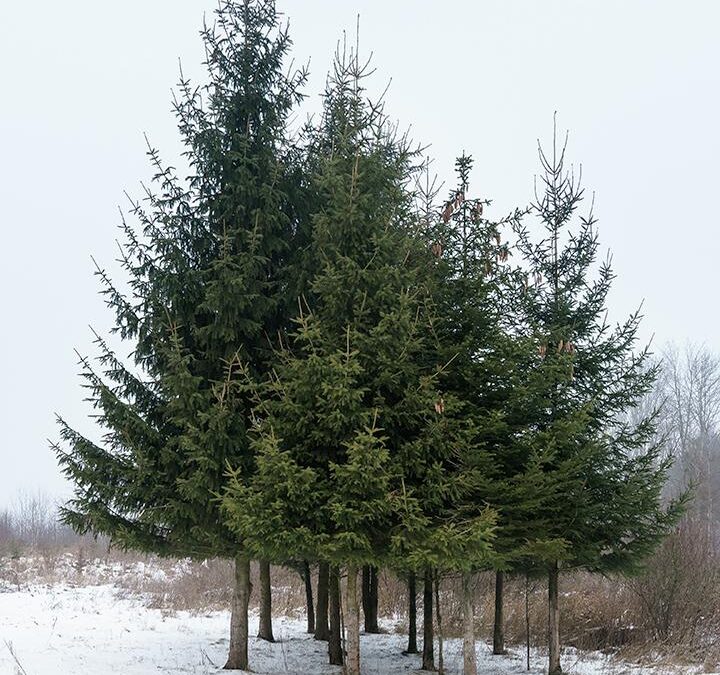
| Common Name |
Norway Spruce |
| Botanical Name |
Picea abies |
| Plant Type |
Evergreen tree |
| Hardiness Zone |
2-7 |
| Mature Size |
40-60 ft tall, 25-30 ft wide |
| Sun |
Full sun |
| Soil |
Adaptable, well-drained |
| Growth Rate |
Fast for an evergreen (2-3 ft/year when young) |
| Deer Resistant |
Yes |
Why Norway Spruce for Wisconsin
Norway spruce is one of the fastest-growing evergreens available. When you need a windbreak, privacy screen, or year-round green backdrop, it delivers results faster than most conifers. The graceful drooping branches give it a distinctive look that improves with age. Older trees develop a majestic, layered silhouette. Hardy to Zone 2, Wisconsin winters are nothing to this tree.
Planting Instructions
When: Spring or early fall. Avoid planting in summer heat.
Where: Full sun. Give it room. This tree gets large over time. Plant 12-15 feet apart for a screen, 20+ feet from buildings for a specimen.
How: Dig a wide, shallow hole. Do not plant too deep. Water deeply at planting and weekly for the first two growing seasons.
Care Throughout the Season
Spring: Bright green new growth appears at branch tips. No pruning needed unless you want to control size (prune new growth only).
Summer: Water young trees during drought. Established trees are fairly drought tolerant.
Fall: Good time to plant. The tree is slowing down growth and focusing on root development.
Winter: Provides windbreak value and winter habitat for birds. Brush heavy snow off lower branches to prevent breakage.
Common Problems in Wisconsin
Needle cast: Fungal disease that causes inner needles to brown and drop. Good air circulation and avoiding overhead watering help.
Spider mites: Can be a problem in hot, dry conditions. Spray the inner foliage with water during dry spells to deter them.
Companion Planting
Dogwood varieties planted in front for winter stem color. Birch as a deciduous contrast tree nearby. Rhododendron or azalea for spring color underneath. Ferns and hosta in the shade below as the tree matures.
Design and Landscape Uses
Windbreaks, privacy screens (plant in staggered rows), specimen tree, or backdrop for other plantings. The weeping form improves dramatically with age. A 30-year-old Norway spruce is one of the most impressive trees in any landscape. Plant it where you have the room and the patience to let it grow.
Fun Fact
Despite the name, Norway spruce is not just from Norway. It’s native across much of northern Europe and was one of the first trees brought to North America by colonists. The Rockefeller Center Christmas tree in New York City has been a Norway spruce more often than any other species.
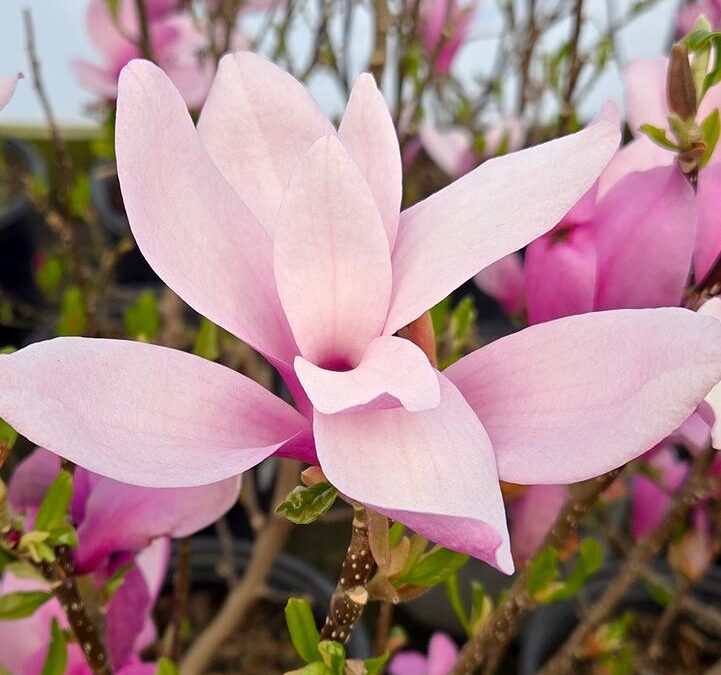
| Common Name |
Jane Magnolia |
| Botanical Name |
Magnolia x ‘Jane’ |
| Plant Type |
Deciduous tree/large shrub |
| Hardiness Zone |
4-8 |
| Mature Size |
10-15 ft tall, 8-12 ft wide |
| Sun |
Full sun to part shade |
| Soil |
Moist, well-drained, slightly acidic |
| Bloom Time |
Mid to late spring |
| Bloom Color |
Purple-pink outside, white inside |
| Deer Resistant |
Yes |
Why Jane Magnolia for Wisconsin
Jane is one of the “Little Girl” hybrid magnolias developed by the U.S. National Arboretum specifically to bloom late enough to avoid spring frost damage. That’s the problem with most magnolias in Wisconsin: they bloom early and a late frost kills the flowers. Jane waits until mid to late spring, after the worst frost risk has passed, then opens reddish-purple buds into tulip-shaped flowers that are purple-pink on the outside and white inside.
Planting Instructions
When: Spring. Magnolias establish best when planted in spring, giving roots a full season before winter.
Where: Full sun to part shade. Avoid south-facing locations where winter sun can warm buds prematurely. An east or north exposure is often better.
How: Magnolias have fleshy, sensitive roots. Handle the root ball carefully. Plant at the same depth. Do not disturb the roots after planting. Mulch generously.
Care Throughout the Season
Spring: Blooms mid-spring. Enjoy them. Occasional rebloom in summer.
Summer: Dark green foliage provides a dense, attractive canopy. Water during dry spells.
Fall: Leaves turn yellow-bronze before dropping. No pruning needed; magnolias have a naturally tidy form.
Winter: The fuzzy flower buds are visible on branch tips, a preview of next spring’s show.
Common Problems in Wisconsin
Late frost: Jane blooms later than most magnolias to avoid this, but a freak late frost can still damage flowers in some years. The tree itself is unharmed.
Root disturbance: Magnolias hate having their roots disturbed. Don’t dig, till, or plant aggressively under the canopy. Mulch is better than perennials at the base.
Companion Planting
Hellebore for early spring flowers at the base. Hosta for summer foliage under the canopy. Daffodils for spring color that doesn’t require root disturbance (plant before the magnolia). Boxwood for evergreen structure nearby.
Design and Landscape Uses
Specimen tree, corner planting, patio tree, or entry feature. The compact size (10-15 feet) makes it one of the best magnolias for residential yards. Beautiful near a front door, along a walkway, or anywhere you want spring drama without a 40-foot tree.
Fun Fact
Jane is one of eight “Little Girl” hybrid magnolias developed in the 1950s by Francis DeVos and William Kosar at the U.S. National Arboretum. All eight were named after women: Ann, Betty, Jane, Judy, Pinkie, Randy, Ricki, and Susan. The breeding goal was specifically to create magnolias that bloom late enough to avoid frost damage in the mid-Atlantic and Midwest.
Jane Magnolia is available at our Cedarburg nursery.
Plant now for spring flowers you can count on.
Visit Us in Cedarburg
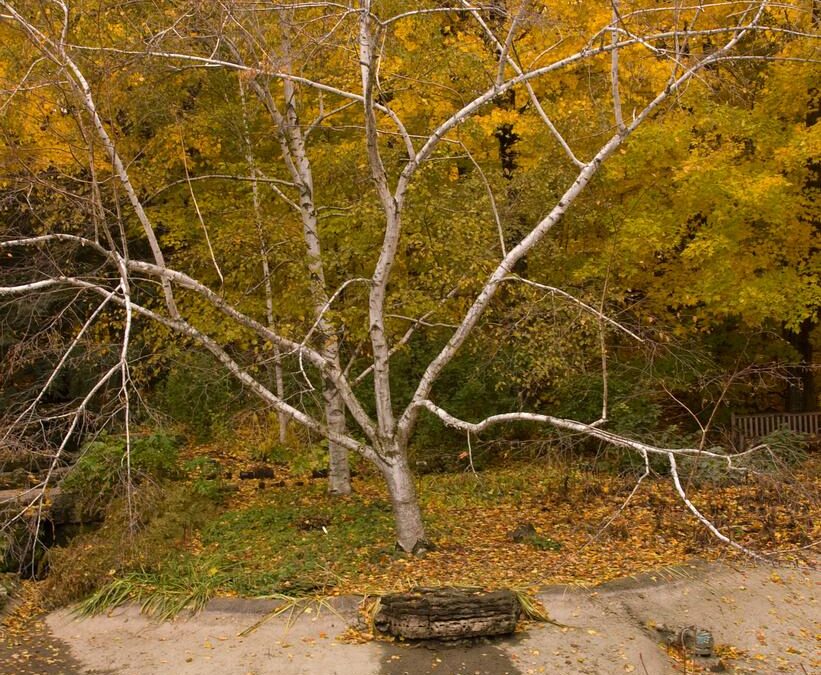
| Common Name |
Paper Birch |
| Botanical Name |
Betula papyrifera |
| Plant Type |
Deciduous tree |
| Hardiness Zone |
2-6 |
| Mature Size |
50-70 ft tall, 25-40 ft wide |
| Sun |
Full sun to part shade |
| Soil |
Moist, well-drained, acidic to neutral |
| Fall Color |
Golden yellow |
| Native To |
North America (Wisconsin native) |
| Wildlife Value |
Seeds feed birds, bark used by wildlife |
Why Paper Birch for Wisconsin
Paper birch is Wisconsin’s state tree, and for good reason. The bright white bark that peels in papery sheets is one of the most recognizable sights in our northern forests. In a home landscape, the bark provides year-round beauty, especially in winter when the white trunks stand out against snow and evergreens. Fall foliage turns a clean golden yellow. As a native species, it supports local wildlife and grows in sync with our climate.
Planting Instructions
When: Spring is best. Paper birch prefers cool soil temperatures during establishment.
Where: A spot with cool, moist roots. The east or north side of a building works well. Avoid hot, exposed southern locations where soil dries out.
How: Plant at the same depth as the root ball. Mulch generously (3-4 inches) over the root zone to keep soil cool and moist. Do not pile mulch against the trunk.
Care Throughout the Season
Spring: Catkins appear before leaves. New foliage emerges bright green. Do not prune birch in spring when sap is running heavily.
Summer: Water deeply during dry spells. Birch are moisture-loving trees and drought stress weakens them. Keep mulch thick over the root zone.
Fall: Clean golden fall color. Prune in late fall or winter if needed.
Winter: The white bark is the star. Multi-stem specimens are especially striking.
Common Problems in Wisconsin
Bronze birch borer: The most serious threat. This insect attacks stressed trees, especially those in hot, dry conditions. Keeping the tree well-watered and the roots cool with mulch is the best prevention.
Birch leafminer: Causes brown blotches on leaves. Mostly cosmetic and doesn’t threaten the tree’s health.
Heat stress: Paper birch is native to cooler climates. In Southeast Wisconsin, planting in a spot that avoids afternoon heat and keeping soil consistently moist is important for long-term health.
Companion Planting
Ferns and hosta under the canopy. Red twig dogwood for winter color contrast. Lowbush blueberry as a native groundcover. Evergreens behind the birch to frame the white bark.
Design and Landscape Uses
Multi-stem birch groupings (clumps of 3) are the classic landscape look. Plant where the bark will catch winter light. Use as a focal point near a window you look out in winter. The white bark also looks stunning illuminated by landscape lighting at night. Works in naturalized settings, rain gardens (tolerates moist soil), and as a specimen tree.
Fun Fact
Paper birch bark was essential to Indigenous peoples of the Great Lakes region, who used it to build canoes, shelters, and containers. The bark is waterproof, flexible, and peels in large sheets. The tree itself can survive temperatures below -40F, making it one of the hardiest deciduous trees on the continent.
Paper Birch is available at our Cedarburg nursery.
Wisconsin’s state tree belongs in a Wisconsin garden.
Visit Us in Cedarburg
| Common Name |
Neon Burst Dogwood |
| Botanical Name |
Cornus alba ‘ByBoughen’ |
| Plant Type |
Deciduous shrub |
| Hardiness Zone |
2-7 |
| Mature Size |
5-6 ft tall, 5-6 ft wide |
| Sun |
Full sun to part shade |
| Soil |
Adaptable, tolerates wet soil |
| Bloom Time |
Late spring (white) |
| Fall Color |
Vivid red |
| Deer Resistant |
Yes |
Why Neon Burst for Wisconsin
Neon Burst brings two seasons of standout color. The chartreuse-gold foliage lights up the landscape from spring through summer, then turns vivid red in fall. Hardy to Zone 2, it laughs at Wisconsin winters. Tolerates wet soil where many shrubs would struggle. The red stems provide winter interest after the leaves drop. A compact, manageable size that fits most residential landscapes.
Planting Instructions
When: Spring or fall.
Where: Full sun for the best gold color. Tolerates part shade. One of the few shrubs that handles consistently moist soil.
How: Standard planting. Tolerates clay and wet conditions that would kill most shrubs.
Care Throughout the Season
Spring: Bright gold foliage emerges. White flower clusters in late spring.
Summer: Gold foliage holds well. Low water needs despite tolerating wet conditions.
Fall: Leaves turn vivid red. One of the more reliable fall performers.
Winter: Red stems stand out against snow. Cut 1/3 of oldest stems to the ground each spring to encourage new, brighter-colored stems.
Common Problems in Wisconsin
Very few. This is one of the lowest-maintenance shrubs in our inventory. Occasional leaf spot in wet summers, but it doesn’t affect plant health.
Companion Planting
Dark-leaved ninebark for foliage contrast. Blue-leaved hosta at the base in shade. Ornamental grasses for texture. Winterberry for a combined winter stem display.
Design and Landscape Uses
Rain gardens (handles wet soil), mixed borders, foundation plantings, mass plantings for winter stem color. The gold foliage makes it a focal point in summer. Plant in groups of 3-5 for winter stem impact.
Fun Fact
Neon Burst was developed in Canada by Brad Chicken of ByBoughen Nurseries in Manitoba. Bred for extreme cold hardiness, it was selected from seedlings that survived -40F winters. The “neon” in the name refers to the almost fluorescent quality of the gold foliage.