
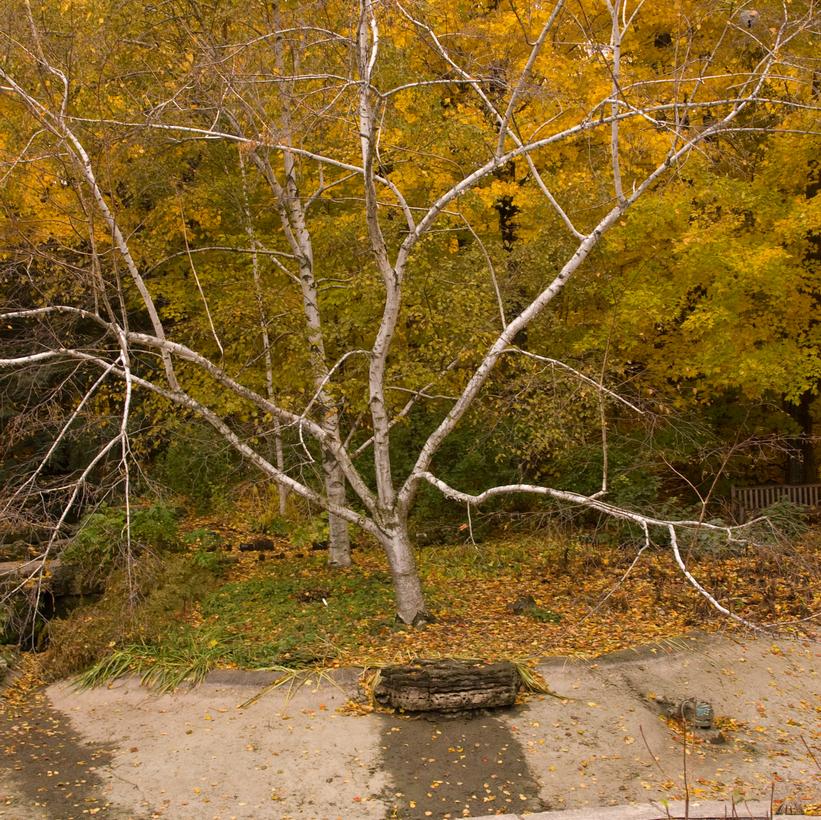
| Common Name | Paper Birch |
| Botanical Name | Betula papyrifera |
| Plant Type | Deciduous tree |
| Hardiness Zone | 2-6 |
| Mature Size | 50-70 ft tall, 25-40 ft wide |
| Sun | Full sun to part shade |
| Soil | Moist, well-drained, acidic to neutral |
| Fall Color | Golden yellow |
| Native To | North America (Wisconsin native) |
| Wildlife Value | Seeds feed birds, bark used by wildlife |
Why Paper Birch for Wisconsin
Paper birch is Wisconsin’s state tree, and for good reason. The bright white bark that peels in papery sheets is one of the most recognizable sights in our northern forests. In a home landscape, the bark provides year-round beauty, especially in winter when the white trunks stand out against snow and evergreens. Fall foliage turns a clean golden yellow. As a native species, it supports local wildlife and grows in sync with our climate.
Planting Instructions
When: Spring is best. Paper birch prefers cool soil temperatures during establishment.
Where: A spot with cool, moist roots. The east or north side of a building works well. Avoid hot, exposed southern locations where soil dries out.
How: Plant at the same depth as the root ball. Mulch generously (3-4 inches) over the root zone to keep soil cool and moist. Do not pile mulch against the trunk.
Care Throughout the Season
Spring: Catkins appear before leaves. New foliage emerges bright green. Do not prune birch in spring when sap is running heavily.
Summer: Water deeply during dry spells. Birch are moisture-loving trees and drought stress weakens them. Keep mulch thick over the root zone.
Fall: Clean golden fall color. Prune in late fall or winter if needed.
Winter: The white bark is the star. Multi-stem specimens are especially striking.
Common Problems in Wisconsin
Bronze birch borer: The most serious threat. This insect attacks stressed trees, especially those in hot, dry conditions. Keeping the tree well-watered and the roots cool with mulch is the best prevention.
Birch leafminer: Causes brown blotches on leaves. Mostly cosmetic and doesn’t threaten the tree’s health.
Heat stress: Paper birch is native to cooler climates. In Southeast Wisconsin, planting in a spot that avoids afternoon heat and keeping soil consistently moist is important for long-term health.
Companion Planting
Ferns and hosta under the canopy. Red twig dogwood for winter color contrast. Lowbush blueberry as a native groundcover. Evergreens behind the birch to frame the white bark.
Design and Landscape Uses
Multi-stem birch groupings (clumps of 3) are the classic landscape look. Plant where the bark will catch winter light. Use as a focal point near a window you look out in winter. The white bark also looks stunning illuminated by landscape lighting at night. Works in naturalized settings, rain gardens (tolerates moist soil), and as a specimen tree.
Fun Fact
Paper birch bark was essential to Indigenous peoples of the Great Lakes region, who used it to build canoes, shelters, and containers. The bark is waterproof, flexible, and peels in large sheets. The tree itself can survive temperatures below -40F, making it one of the hardiest deciduous trees on the continent.
Paper Birch is available at our Cedarburg nursery.
Wisconsin’s state tree belongs in a Wisconsin garden.