
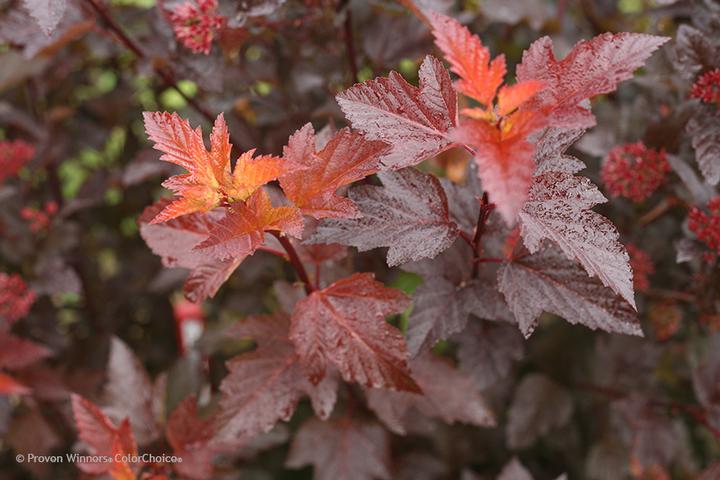
Ginger Wine Ninebark at a Glance
| Botanical Name | Physocarpus opulifolius ‘SMNPMS’ |
| Common Name | Ginger Wine Ninebark |
| Plant Type | Deciduous Shrub |
| Mature Size | 5-6 ft. tall, 5-6 ft. wide |
| Growth Rate | Moderate to fast |
| Hardiness Zones | USDA 3-7 |
| Sun Exposure | Full sun to partial shade |
| Soil Preference | Adaptable; tolerates most soil types and pH levels |
| Water Needs | Moderate; drought-tolerant once established |
| Bloom Time | Late spring to early summer (white flower clusters) |
Why Ginger Wine Ninebark Thrives in Wisconsin
Ninebark is native to North America, and Ginger Wine takes all the toughness of the wild species and wraps it in showstopping foliage. Hardy to Zone 3, this shrub handles Cedarburg winters with zero fuss. It shrugs off late frosts, heavy clay, poor drainage, and even short dry spells once its roots have settled in.
What really sets Ginger Wine apart from older ninebark cultivars is its superior resistance to powdery mildew. That disease plagues many landscaping shrubs during Wisconsin’s humid summers, but Ginger Wine stays clean and healthy. The result is a low-maintenance shrub that looks polished from spring through fall without constant spraying or pruning.
Planting Your Ginger Wine Ninebark
Best planting time in Wisconsin: Spring (after the last frost) or early fall. Both windows give roots time to establish before temperature extremes hit.
Pick a site with at least six hours of direct sunlight for the best foliage color. Ginger Wine tolerates partial shade, but the orange-to-burgundy leaf display will be less vivid. Soil type matters less with this shrub than with most. Clay, loam, sandy ground, acidic or alkaline pH — ninebark handles it all.
Dig the hole twice as wide as the container and the same depth as the root ball. Set the plant so the top of the root ball is level with the surrounding soil. Backfill, tamp gently, and water deeply. Mulch 2 to 3 inches around the base, keeping mulch away from the stems.
During the first growing season, water deeply twice a week to help roots spread. After that first year, Ginger Wine is remarkably drought-tolerant and will rarely need supplemental watering except during extended dry periods.
Seasonal Care Calendar
Spring: Watch for fresh orange growth emerging from the stems. Apply a balanced slow-release fertilizer as buds break. Avoid high-nitrogen formulas after midsummer, as they push soft growth that is vulnerable to early frost.
Summer: Enjoy the progression from warm orange foliage to deep burgundy. White flower clusters appear in late spring and age into attractive red seed heads that extend the display. Water only during prolonged drought.
Fall: If the shrub needs shaping, prune after flowering or wait until late winter. Ginger Wine looks best when allowed to keep its natural arching form, so avoid heavy shearing. Thin out the oldest stems at ground level to encourage fresh growth from the base.
Winter: The peeling, cinnamon-toned bark adds subtle texture to the winter garden. No wrapping or special protection is needed in our climate. Leave seed heads in place for winter bird interest if you prefer a naturalistic look.
Common Problems and Solutions
Powdery Mildew: Ginger Wine was bred for strong mildew resistance, so this is rarely an issue. If white powdery patches do appear in very humid conditions, improve air circulation by thinning interior branches.
Aphids: Soft new growth can attract aphids in spring. A strong blast of water from the hose knocks them off. Ladybugs and lacewings provide natural control as the season progresses.
Leaf Scorch: In extremely hot, dry summers, leaf edges may brown slightly. Deep watering during heat waves prevents this. It is cosmetic, not harmful.
Overpruning: The biggest mistake gardeners make with ninebark is shearing it into a box. This destroys the graceful arching habit and reduces flowering. Stick to selective thinning cuts instead.
Companion Plants
Ginger Wine’s shifting foliage colors create a rich backdrop for perennials. Pair it with bright yellow black-eyed Susans or purple coneflowers for a striking contrast against the burgundy leaves. Ornamental grasses like Karl Foerster feather reed grass add vertical texture beside the ninebark’s rounded form.
For a native pollinator garden, combine Ginger Wine with wild bergamot, baptisia, and little bluestem grass. All share similar sun and soil needs, and the combination provides blooms and seed heads from late spring into winter. Blue-flowered amsonia makes an especially fine partner, with its starry spring blooms echoing the ninebark’s white flowers.
Design Uses
Ginger Wine works beautifully as a specimen shrub, a privacy screen, or a colorful anchor in mixed borders. Plant a row along a property line for an informal hedge that requires far less maintenance than privet. Space plants 4 to 5 feet apart for a screen that fills in within two to three growing seasons.
In smaller gardens, use a single Ginger Wine as a focal point surrounded by low perennials. The foliage color shift from orange to burgundy keeps the composition interesting all season. Mass plantings on slopes or along driveways take advantage of ninebark’s erosion control and drought tolerance. It also fits well in rain gardens and naturalized areas where a tough, beautiful shrub is needed.
Fun Facts
- The name “ninebark” comes from the shrub’s peeling bark, which separates into thin, papery layers. Count them and you might find close to nine.
- Ginger Wine is a Proven Winners ColorChoice selection, developed for superior disease resistance and multi-season color.
- Ninebark flowers are a magnet for pollinators. Bees, butterflies, and beneficial hoverflies all visit the late-spring blooms.
- The genus name Physocarpus translates to “bladder fruit,” referring to the inflated seed pods that form after flowering.
- Native ninebark has been growing in North American woodlands and along streambanks since long before European settlement.
Find Ginger Wine Ninebark at Heritage Hill Nursery
Looking for a tough, colorful shrub that practically takes care of itself? Our team can help you pick the right spot and get it planted. Come see Ginger Wine in person.