
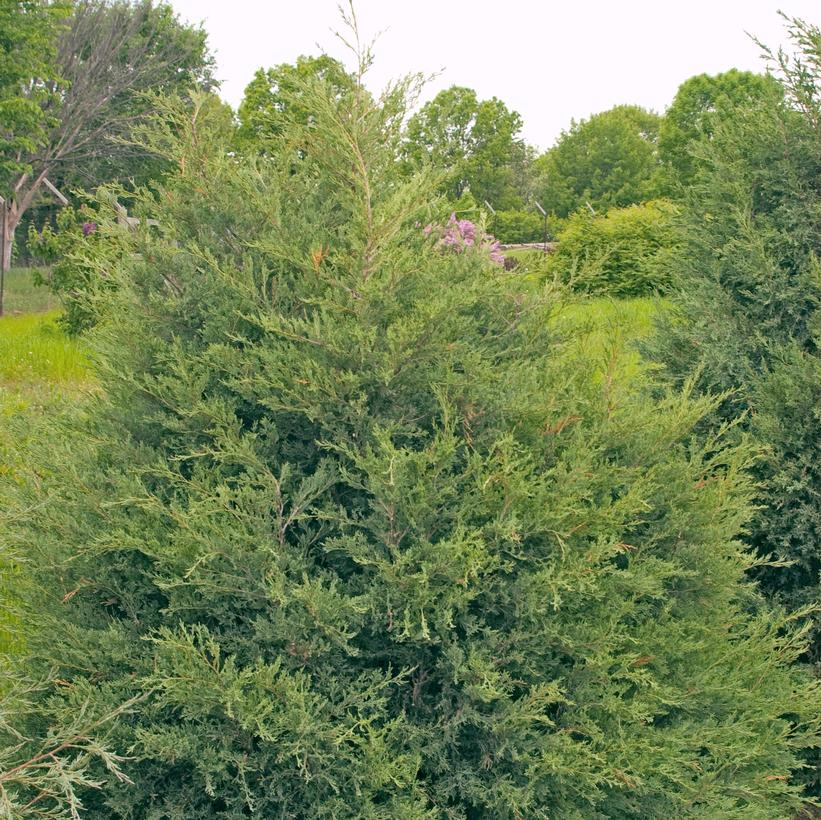
| Common Name | Eastern Red Cedar |
| Botanical Name | Juniperus virginiana |
| Plant Type | Evergreen tree |
| Hardiness Zone | 2-9 |
| Mature Size | 40-50 ft tall, 8-20 ft wide |
| Sun | Full sun |
| Soil | Extremely adaptable (clay, sand, rocky, alkaline) |
| Berry Color | Blue (female trees) |
| Native To | Eastern North America (Wisconsin native) |
| Wildlife Value | Outstanding (berries, nesting, shelter) |
Why Eastern Red Cedar for Wisconsin
Eastern red cedar is one of the toughest native trees in Wisconsin. It grows in conditions that would kill most other plants: thin rocky soil, exposed hilltops, road edges, alkaline clay. Cedar waxwings (named after this tree) and dozens of other bird species depend on the blue berries for winter food. The dense, evergreen foliage provides critical winter shelter for birds and small wildlife. In a home landscape, it provides year-round green structure with almost zero maintenance.
Planting Instructions
When: Spring or fall.
Where: Full sun. Avoid planting near apple orchards (see cedar-apple rust below). Tolerates the worst soil you can throw at it.
How: These are survivors. Dig a hole, plant it, water it once. They do not need soil amendments, fertilizer, or coddling.
Care Throughout the Season
Spring: Bright green new growth. If you see orange, gelatinous blobs on the branches, that’s cedar-apple rust galls (see below).
Summer: Zero maintenance once established. Drought tolerant. Does not need supplemental watering.
Fall: Blue berries appear on female trees. Birds start feeding.
Winter: Provides critical shelter for overwintering birds. Leave it alone.
Common Problems in Wisconsin
Cedar-apple rust: A fungal disease that alternates between cedar and apple trees. The orange galls on cedar branches are the spore-producing stage. It rarely harms the cedar but can damage nearby apple or crabapple trees. Keep them at least 100 feet apart if possible.
Bagworms: Occasionally a problem. The caterpillars build small bag-like cases from foliage. Hand-pick them in fall or treat in late spring when larvae are small.
Companion Planting
Winterberry for red berry contrast. Native grasses (little bluestem, switchgrass) at the base for a natural meadow feel. Chokeberry for another native berry producer. Coneflower and black-eyed Susan in the sunny areas around the tree.
Design and Landscape Uses
Windbreaks, screens, hedges (tolerates shearing), wildlife habitat plantings, or specimen use. The narrow, columnar form of young trees fits tight spaces. Older trees become more pyramidal and stately. Plant a row for a living fence that feeds birds all winter. Works well in naturalized landscapes and restoration projects.
Fun Fact
Despite the common name, eastern red cedar is not actually a cedar at all. It’s a juniper (Juniperus). The aromatic, rot-resistant wood was historically used for fence posts, closet linings, and pencils. The heartwood has a distinctive red color, hence the name. Cedar chests (the ones your grandmother used to store woolens) are traditionally made from this wood. The tree can live 300+ years in the wild.
Eastern Red Cedar is available at our Cedarburg nursery.
A Wisconsin native that gives back to the ecosystem year-round.