
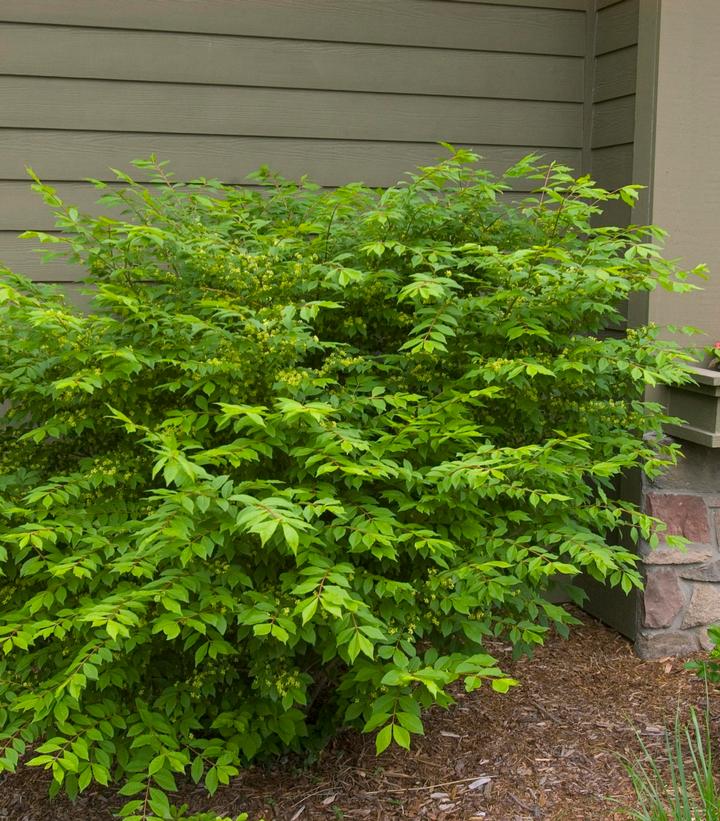
| Common Name | Burning Bush |
| Botanical Name | Euonymus alatus |
| Plant Type | Deciduous shrub |
| Hardiness Zone | 4-8 |
| Mature Size | 15-20 ft tall (dwarf varieties 6-10 ft) |
| Sun | Full sun to part shade |
| Soil | Adaptable, tolerates most soil types |
| Fall Color | Brilliant scarlet red |
| Deer Resistant | Moderate |
| Native To | Northeast Asia |
Why Burning Bush for Wisconsin
Burning bush is one of the most reliable sources of fall color in Southeast Wisconsin. When the leaves turn in October, the entire shrub becomes a uniform, intense scarlet that nothing else quite matches. It adapts to almost any soil condition, handles urban pollution, tolerates pruning, and requires very little maintenance. There is a reason customers ask for it year after year.
A note on invasiveness: burning bush is classified as invasive in several northeastern states. It is not currently banned in Wisconsin, but it does self-seed in some areas. If this concerns you, plant the compact variety ‘Compactus’ or consider native alternatives like chokeberry or Virginia sweetspire for similar fall color.
Planting Instructions
When: Spring or fall.
Where: Full sun produces the most intense fall color. Part shade works but the red will be less vivid.
How: Extremely adaptable. Dig a hole, plant it, water it. Tolerates clay, sand, acid, and alkaline soils.
Care Throughout the Season
Spring: Green foliage emerges. Prune to shape if needed.
Summer: Low maintenance. Tolerates drought once established.
Fall: The show. Brilliant scarlet foliage for 2-3 weeks.
Winter: The corky, winged bark provides subtle texture. Interesting branch structure when bare.
Common Problems in Wisconsin
Scale insects: Euonymus scale can be a problem. Watch for white or brown bumps on stems. Horticultural oil in late winter or early spring helps control them.
Overgrowth: The species can reach 15-20 feet if left unpruned. Most people want the dwarf ‘Compactus’ form (6-10 feet). Prune annually to maintain size.
Self-seeding: Birds spread the seeds. Remove seedlings if they appear where you don’t want them.
Companion Planting
Ornamental grasses (blonde tones contrast with the red). Evergreens like boxwood or arborvitae provide a green backdrop that makes the fall color even more striking. Aster and mums for a full fall display.
Design and Landscape Uses
Hedges, screens, foundation plantings, or specimen use. The dwarf form fits most residential situations. Works well at property borders or wherever you want a guaranteed fall color statement. Plant it where you can see it from a window.
Fun Fact
The “wings” on burning bush stems are made of corky tissue and are the reason for the species name “alatus” (meaning winged). These wings make the bare winter branches easy to identify. The common name comes from the biblical burning bush, though the actual plant in that story was likely a different species entirely.
Burning Bush is available at our Cedarburg nursery in both standard and dwarf forms.